Key Features of Cloud Threat Investigation (CDR)
Sweet team
|
November 9, 2026
Cloud platforms produce far more security signals than any team can act on. Cloud detection and response is the layer that turns those signals into validated, prioritized action with someone accountable for it. This guide covers how that loop works, which capabilities make it dependable, and how to evaluate a product. It stays vendor-neutral on architecture and is not a substitute for provider-specific configuration guidance from AWS, Azure, or Google Cloud.
Key takeaways about what is cloud detection and response
- CDR turns raw cloud activity into prioritized, response-ready incidents by linking telemetry with asset ownership, identity paths, behavioral history, exposure, and the potential impact of an action.
- Effective cloud threat detection relies on records from control planes, identities, workloads, networks, and data access; missing logs create blind spots that correlation cannot restore.
- A cloud detection and response solution should support scoped, reversible actions, with approvals for disruptive changes and audit records that explain what ran, why it ran, and how to undo it.
- The most useful features of cloud detection and response improve decision quality: they reduce low-context escalations, rank findings by real reachability and impact, and fit into existing security workflows.
Secure your cloud at runtime.
Continuously.
See Sweet prove where your cloud can be breached and stop it in real time, in a 30-minute walkthrough.
What is cloud detection and response (CDR)?
Cloud detection and response (CDR) is the practice and tooling used to collect cloud telemetry, enrich it with context about assets, identities, and actual behavior, and drive a governed response to threats that are live in a cloud environment.
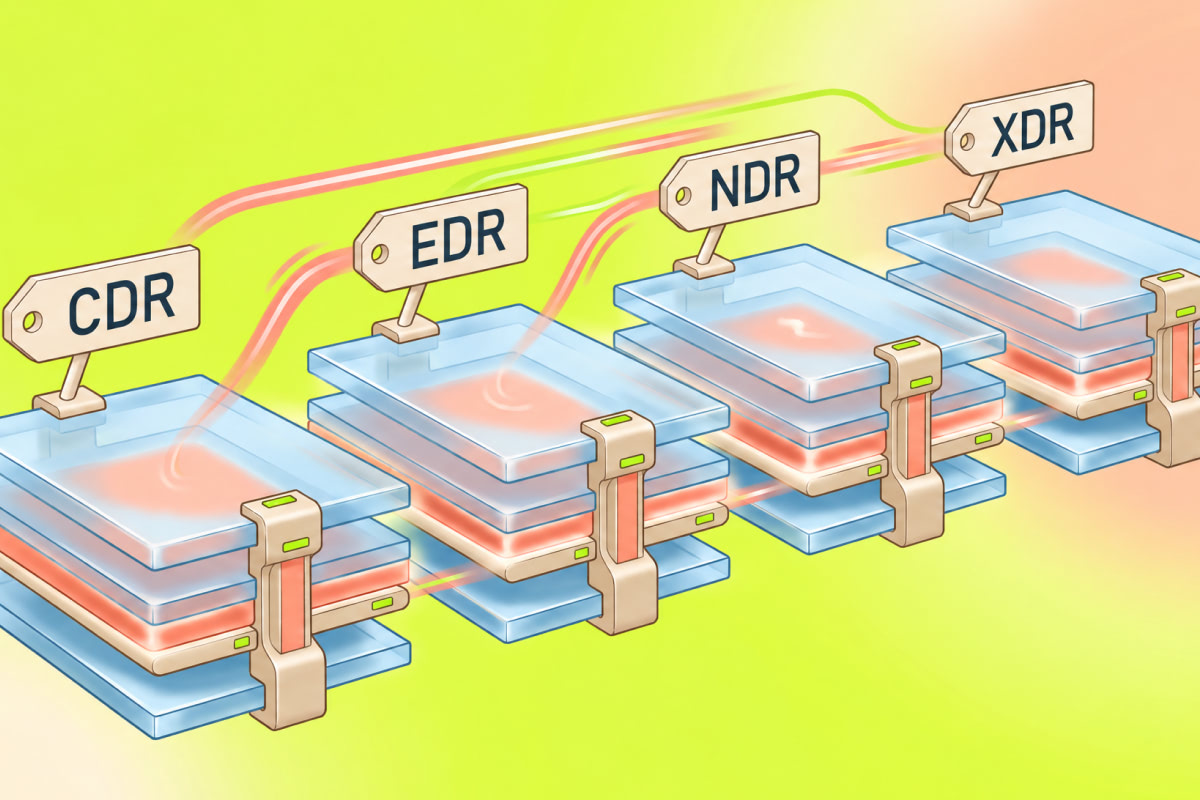
CDR is distinguished from adjacent categories by when it operates. Cloud security posture management (CSPM) evaluates configuration against policy. Cloud workload protection (CWPP) hardens and monitors compute. CDR concerns itself with activity already underway across the control plane, the identity layer, and workload runtime, and with what happens after something is found.
A native cloud signal might report that a role was assumed from an unfamiliar network. A response-ready incident states which workload holds that role, what data the role can reach, whether that workload has ever behaved this way, and what breaks if the session is revoked.
One example runs through this guide. A service identity belonging to a batch-processing workload assumes a role it has never used, then begins listing objects in a bucket holding customer records. The raw event and the response-ready incident describe the same moment, but only one supports a decision.
Why cloud environments need automated cloud incident response
The environment under investigation does not hold still while anyone investigates it. Automated cloud incident response exists to finish the correlation before the evidence expires.
Cloud visibility gaps across multi-cloud and hybrid environments
Many organizations run across more than one provider, plus on-premises systems that still hold critical data. Each environment emits different record formats, different identity models, and different retention defaults, so the same attacker action can surface as three unrelated events.
Where logging is partial, response is guesswork, and no amount of correlation logic recovers an event that was never recorded.
The speed and scale of cloud-native threats
Volume alone is survivable. Three properties of cloud-native infrastructure make manual correlation unreliable rather than merely slow.
- Ephemeral workloads: A container implicated in suspicious activity may be terminated before a ticket is opened, taking its process and network evidence with it unless that evidence was captured at runtime.
- Chained identities: Cloud compromise typically moves through role assumption and token reuse, so the interesting signal is a permission path rather than a single host.
- API-speed actions: Data access, resource creation, and privilege changes happen in seconds through APIs, compressing the time between initial access and impact.
All three point to the same requirement: context has to be assembled while the event is still live.
How cloud detection and response works
Automation helps only when it changes what the evidence contains, not when it routes a ticket faster. The loop behind cloud threat detection and response runs in six moves: collect, enrich, validate, prioritize, respond, and learn.
Collecting and correlating cloud telemetry
Collection sets the ceiling for everything downstream. Correlation determines whether what was collected reads as a single story rather than scattered records.
- Control plane records: API calls, configuration changes, and resource creation across each cloud account, such as AWS CloudTrail, Azure Activity Log, and Google Cloud Audit Logs.
- Identity events: Authentication, role assumption, token issuance, and permission changes.
- Workload runtime signals: Process execution, file activity, and outbound connections inside containers and virtual machines.
- Network and data access: East-west traffic patterns and reads against sensitive storage.
In the running example, correlation joins the role assumption to the specific pod that requested it and to the bucket the role can reach.
Detecting risky behavior and active threats
With those layers joined, cloud threat detection becomes a question about behavior rather than configuration. The batch workload has a history: the roles it normally assumes, the services it normally calls, the volume of objects it normally touches. A static rule cannot weigh a deviation from that history.
MITRE ATT&CK's cloud matrices catalog patterns such as Valid Accounts: Cloud Accounts (T1078.004) and Data from Cloud Storage (T1530). Technique references give a detection a name and an expected next step, which helps when validating confidence and communicating findings.
Investigating and responding to incidents
Four stages, not one action
Response is where precision in language matters. Investigation establishes what happened, decisioning establishes whether the finding meets a confidence threshold, orchestration selects the action, and enforcement carries it out. Collapsing all four into "automatic blocking" is how teams end up disabling automation after one bad outage.
Matching the action to blast radius
For the compromised service identity, revoking the active session is low blast radius and reversible. Deleting the role the production pipeline depends on is neither. The same incident can therefore produce one automated action and one action that waits for an owner's approval, with both recorded for audit and fed back into tuning.
Key features of a cloud detection and response solution
That loop is easy to describe and hard to run every day. Read the features of cloud detection and response by which stage of the loop each one holds up, and what evidence proves it is working.
Continuous cloud asset and identity monitoring
A response decision needs to know what the affected resource is and who owns it. That requires a live inventory of workloads, accounts, and service identities, along with the permission paths connecting them.
Identity is usually the weakest link in that map. Knowing that a role is over-permissioned matters far less than knowing which identities actually used it, and when. Identity security context turns a theoretical privilege path into an observed one.
Threat detection, prioritization, and contextual alerts
The wrong axis for judging prioritization
Prioritization is often judged on the wrong axis. The useful test is whether a platform's ordering matches what an experienced responder would choose, not how many findings it raises.
Why exposure changes the ranking
Ordering improves when exposure and reachability are part of the calculation. A finding on an internet-reachable workload holding a role with access to customer data outranks the identical finding on an isolated test service, and a contextual alert should show that reasoning rather than hide it behind a score.
Automated response workflows and remediation
Workflows carry the decision into the environment. The capability worth testing is scoping: can an action target one session, one container, or one key without touching the rest of the service?
What happens afterward matters just as much. Every automated action should produce a record of what ran, under which rule, with what confidence, and how to reverse it. Without that, automation becomes a liability during the review that follows any significant incident.
Benefits of CDR for cloud threat detection
Gains show up in operations rather than in a findings count. The size and timing of each depend on logging coverage, environment complexity, and how much tuning the deployment receives.
Faster detection and reduced mean time to respond
NIST's Computer Security Incident Handling Guide (SP 800-61) separates detection and analysis from containment, eradication, and recovery. Much cloud delay accumulates in the handoff between them, while analysts reconstruct which identity did what to which asset.
CDR compresses that handoff by arriving with the reconstruction already attached. In the service-identity example, the evidence needed to scope containment, which workload, which role, which data, is present in the finding rather than assembled from several consoles after the fact.
Improved security coverage and analyst efficiency
Efficiency gains come from removing low-value work, not from removing people. Over time, a functioning loop changes the composition of the queue itself.
- Fewer low-context escalations: Findings that cannot be acted on are resolved by enrichment instead of by a human triage pass.
- Faster confidence: Responders reach a decision with the evidence present, which shortens the argument about whether an event is real.
- More consistent response: The same class of event produces the same action regardless of who is on shift.
- Broader practical coverage: Accounts that were technically in scope but never reviewed start producing usable incidents.
Several of these outcomes fail in predictable ways during the first months of a rollout.
Challenges and best practices for implementing CDR
The failures are rarely detection failures. They are governance and integration failures, and they surface once automation starts touching production.
Managing alert noise and detection tuning
Behavioral detection needs a learning period, and new workloads will look anomalous before they look normal. Teams that enable every rule at full sensitivity on day one often conclude the platform is noisy when it is simply untuned.
Treat tuning as a standing activity owned by a named person, and document each suppressed finding so coverage loss is deliberate.
Integrating CDR with existing security operations
Feeding the systems already in use
Most teams already run a SIEM, a ticketing system, and cloud-native security services such as GuardDuty, Defender for Cloud, or Security Command Center. CDR earns its place by producing the response-ready incident those systems consume, rather than becoming another console analysts must remember to check.
Settling ownership before automation runs
Ownership ambiguity is a common failure here. If cloud engineering owns remediation and security owns the finding, agree on the response path before enabling automation, or every high-impact action will stall waiting for someone to claim it.
Establishing response playbooks and access controls
Safe automated cloud incident response depends on explicit boundaries, not on trust in the detection engine. Staging those boundaries keeps early automation from causing outages.
- Confidence thresholds: Define the evidence required before an action can run without a human in the loop.
- Blast-radius limits: Scope each playbook to the smallest unit that resolves the threat: a session, a token, a single workload.
- Approval paths: Route business-sensitive actions, such as disabling a production role, to a named owner with a defined response time.
- Rollback plans: Document and test how each action is reversed before it is permitted in production.
- Audit trails: Record every automated and approved action so the post-incident review has a factual record.
These same boundaries are the sharpest test of a platform, which makes them a useful starting point for evaluation.
Choosing the right CDR solution
Selection reduces to a short set of questions worth asking every vendor. You are looking for evidence that the platform can run this loop in your environment, with your providers and your approval model.
Evaluating cloud platform coverage and integrations
Start with the environments you actually operate. Coverage parity across providers is rarely uniform, so ask which telemetry is collected natively versus inferred, and what degrades when an account sits in a region or service tier the vendor supports less fully.
Integration depth matters as much as breadth. A cloud detection and response solution that cannot write its incidents into your existing workflow, with ownership, context, and reversal instructions intact, will create a parallel process that quietly falls out of use.
Assessing detection quality, automation, and scalability
Assess detection quality on your own data rather than a reference deployment. Ask for a proof of value measured by decision quality rather than volume of findings.
- Validation evidence: Can the platform show why it concluded a behavior was malicious, using observed activity?
- Automation governance: Are confidence thresholds, approval routing, and rollback configurable per action?
- Scale behavior: What happens to enrichment and response latency as accounts, clusters, and identities multiply?
- Auditability: Does every action produce an attributable record suitable for regulators and post-incident review?
Vendors answer these questions differently, and the right fit depends on which providers you run and how your approval model is structured. Sweet Security takes a runtime-centric approach that pairs cloud runtime context with cloud detection and response capabilities, so a decision carries the behavioral evidence that produced it. For named options and ranked comparisons, a dedicated software roundup is the better reference.
Cloud signal volume was never the hard part. Trusted action is. The question behind every section here is whether your team can turn a cloud event into a safe, accountable response right now, and cloud and AI workloads change behavior faster than configuration ever did. For a deeper look at how live behavior underpins these decisions, see the complete runtime security guide.
Cloud detection and response FAQs
What data sources does CDR use to investigate a cloud security incident?
CDR correlates control-plane records, identity events, workload runtime signals, network activity, and sensitive-data access logs. It enriches those sources with asset ownership, permission paths, exposure, and behavioral history to reconstruct the incident.
How does CDR distinguish a real cloud threat from unusual but legitimate activity?
CDR compares observed activity with the normal behavior of the affected identity and workload, then evaluates the asset's exposure, reachability, and potential impact. This context helps separate a harmless deviation from behavior that indicates active compromise.
What information should a response-ready cloud security alert include?
A response-ready alert should identify the affected workload and identity, the actions taken, accessible data or resources, behavioral history, exposure, and potential impact. It should also explain why the event was prioritized and what scoped response or rollback option is available.
Which cloud incident-response actions can be safely automated first?
Start with low-blast-radius, reversible actions such as revoking an active session, token, or narrowly scoped access path. Disruptive actions that could affect a production service should require approval from the responsible owner.
How can teams prevent automated remediation from disrupting production workloads?
Teams should limit playbooks to the smallest affected unit, define confidence thresholds, require approvals for business-sensitive changes, and test rollback procedures before production use. Audit records should show what action ran, why it ran, and how it can be reversed.
What should organizations test during a CDR proof of value?
Organizations should test whether CDR collects the necessary telemetry, explains why detections are credible, prioritizes incidents by real reachability and impact, and integrates with existing workflows. They should also validate automation controls, approval routing, rollback, auditability, and performance as cloud environments scale.
How does CDR reduce alert fatigue for cloud security analysts?
CDR reduces alert fatigue by enriching and validating raw signals before they reach analysts, so the queue contains fewer low-context escalations. It also prioritizes findings by actual risk and provides the evidence needed to make faster, more consistent decisions.