Understanding Cloud Security Alert Fatigue
Sweet team
|
November 10, 2026
Cloud security alert fatigue starts long before analysts stop reading their queue. It starts when findings arrive without enough context to decide whether anything is actually at risk. This guide covers what breaks first, why cloud environments cause it, which reduction practices hold up operationally, and where AI-based prioritization helps. The patterns described here are common across cloud operations rather than universal: account structure, ownership model, and regulatory scope all change what applies.
Key takeaways about cloud security alert fatigue
- Cloud security alert fatigue is degraded decision-making caused by sustained, poorly contextualized findings; responders need evidence about exposure, reachability, identity privilege, asset importance, and runtime behavior to make defensible choices.
- Reducing cloud alert fatigue requires more than lowering volume: teams should group duplicate root causes, maintain bounded suppressions, enrich findings consistently, and route investigations to accountable service or identity owners.
- Multi-cloud operations, decentralized ownership, ephemeral resources, and lean teams make queues harder to manage because critical context is distributed across systems, schemas, and organizational boundaries.
- The best cloud security alert fatigue reduction tools provide coverage, root-cause correlation, explainable prioritization, ownership routing, controlled tuning, auditability, and integrations that assemble posture, telemetry, threat intelligence, and runtime evidence.
- AI-based risk engines reduce alert fatigue in cloud environments when they expose their rationale, preserve human approval for disruptive actions, avoid silent suppression, and are continuously validated against analyst and incident outcomes.
Secure your cloud at runtime.
Continuously.
See Sweet prove where your cloud can be breached and stop it in real time, in a 30-minute walkthrough.
What is cloud security alert fatigue?
A long queue is not the problem. A queue becomes unworkable when nothing in it carries enough evidence to support a defensible decision. Cloud security alert fatigue is the degraded decision-making that follows a sustained stream of poorly contextualized signals: technically valid findings that cannot, on their own, tell a responder whether the risk they describe is live, reachable, or consequential right now. The pattern closely parallels alarm fatigue in clinical environments, where high rates of non-actionable alarms led staff to delay or dismiss responses.
The gap is between a finding and a decision. A high-severity misconfiguration on a public-facing workload is not actionable by itself. It becomes actionable when it is joined with internet exposure, a reachable network path, a privileged identity attached to the workload, and evidence that something actually executed or attempted access. Without those joins, every item looks equally urgent.
Most teams have that evidence somewhere. It rarely arrives attached to the finding that needs it, and cloud architecture is what pulls the two apart.
What causes alert fatigue in cloud security?
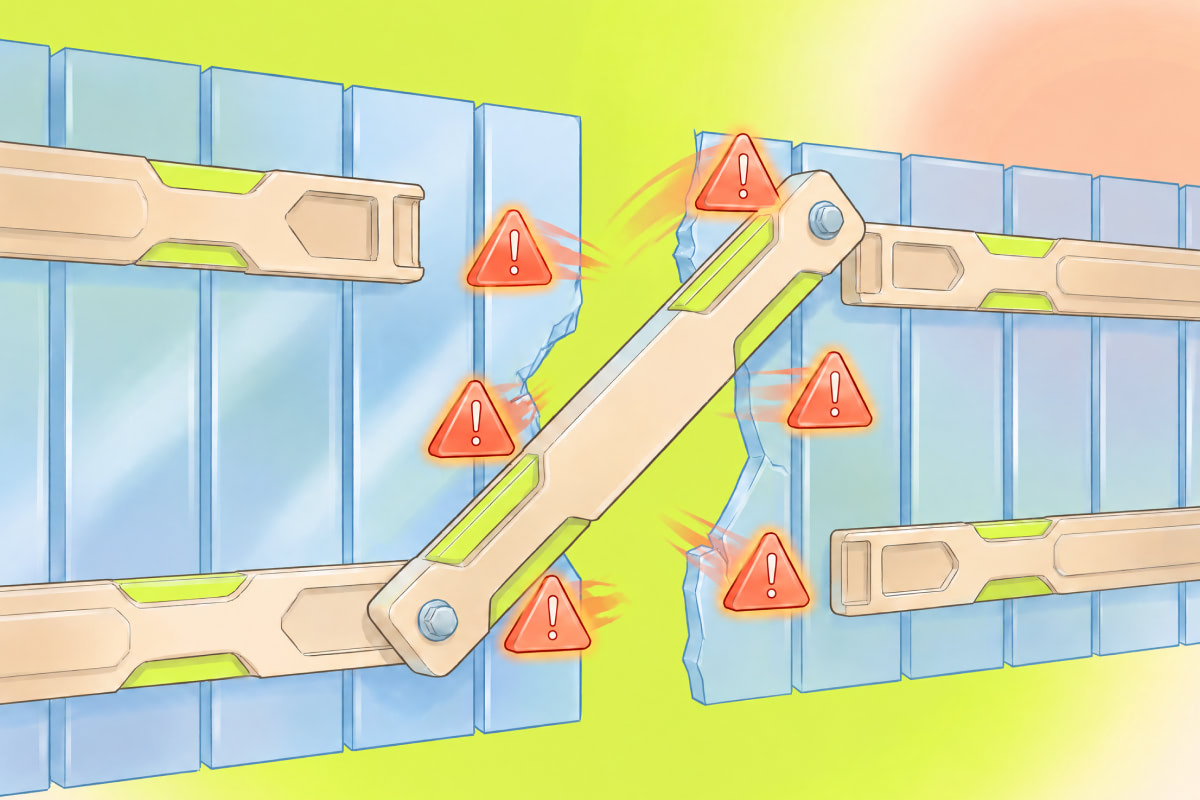
Fragmentation is the root condition, and cloud architecture multiplies it. The shared responsibility model described by the Cloud Security Alliance and the major providers divides control between provider and customer by service type, so the configuration state, identity data, and telemetry a responder needs are deliberately split across different systems and different owners. Cloud scale produces findings faster than it produces the context that makes them decidable.
High alert volume and duplicate notifications
Volume is the symptom practitioners notice first, and duplication is what makes it feel infinite. A single control failure, such as an overly permissive storage policy applied through a shared module, can surface as dozens of separate items, each investigated independently by whoever picks it up.
Where duplicate findings originate
- Account replication: One misconfigured template deployed across fifty accounts becomes fifty findings with one root cause and one owner.
- Overlapping scanners: Native cloud services and third-party platforms both evaluate the same resource against similar rules.
- Downstream fan-out: The same finding is forwarded into a case system, a chat channel, and a ticketing queue, generating three work items.
- Re-emission on change: Ephemeral workloads are rebuilt, and the finding returns as new rather than persisting as open.
Normalization and ownership grouping collapse that example back to one investigation. Many queues never get that treatment, because the signals were never designed to be joined.
Poorly tuned detection rules and misconfigurations
Duplication inflates the queue; flat severity removes any way to work through it.
Severity that ignores environment
Vendor-assigned severity describes the class of weakness, not its position in a specific environment. CVSS makes this explicit: base metrics capture the intrinsic characteristics of a vulnerability, while the environmental metric group exists to adjust for local context, and that group is frequently left unpopulated. The practical result is that a "critical" finding on an isolated test account and the same finding on a revenue-processing service arrive indistinguishable.
Rules that outlive their architecture
Detection logic written for an architecture that has since changed keeps firing on behavior that is now expected, and analysts learn, correctly, that a given rule rarely means anything. That learned dismissal is cheap until the one case that matters arrives wearing the same label.
Fragmented cloud security tooling and context gaps
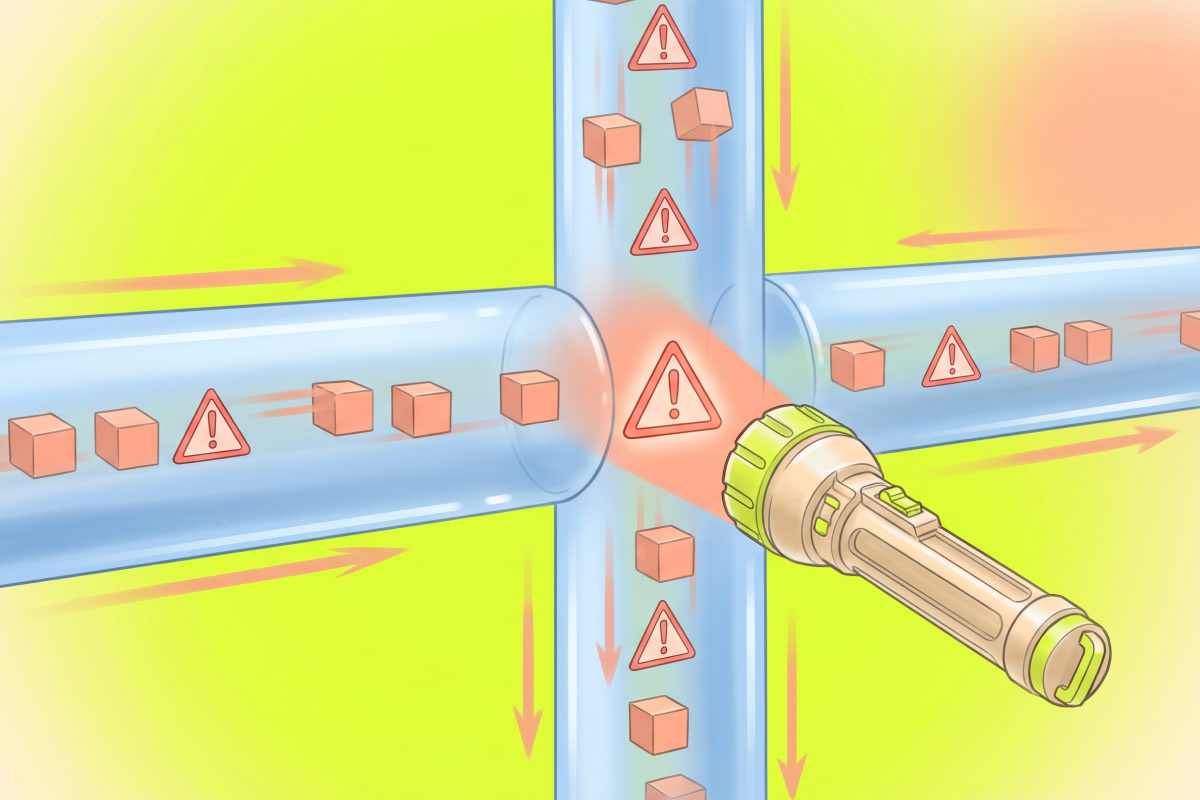
Rule quality only explains part of the problem. The larger gap is that posture findings, identity data, network reachability, and actual workload behavior typically live in separate systems with separate owners. Joining fragmented cloud signals with environmental context is the work that makes a finding decidable, and where it is not automated it falls to analysts to repeat manually, per ticket, under time pressure.
Ownership ambiguity is the final multiplier. When a finding reaches a queue without naming the accountable service or identity owner, triage begins with a routing question instead of a risk question.
The impact and consequences of alert fatigue on security teams
An undecidable queue produces inconsistency, not just delay. Two analysts handed the same finding on different days reach different conclusions, because neither has the evidence to reach the same one. The real cost of cloud security alert fatigue is the inability to defend a triage choice afterward.
Missed threats and slower incident response
NIST SP 800-61 treats incident prioritization as one of the most consequential decision points in handling, and builds its guidance around repeatable triage, escalation, and documentation. Each of those steps assumes the responder can tell what a signal means. When they cannot, prioritization becomes arrival order, escalation becomes personal judgment, and documentation records what was done rather than why.
The operational result is that genuinely active risk waits behind non-actionable findings. Prioritized findings have to become accountable investigation and response work with a named owner and a recorded rationale; otherwise the queue reorders itself every shift.
Analyst burnout, turnover, and lost productivity
Ambiguity exhausts analysts faster than effort does. Working a queue where most items turn out to be non-events trains people to expect non-events, and that expectation is the most durable damage fatigue does.
These patterns are not evenly distributed. Some operating models make them nearly unavoidable.
Who is most at risk from cloud security alert fatigue?
Fatigue concentrates where responsibility and context are separated, which is a property of how an estate is organized rather than of team capability.
Security operations teams managing multi-cloud environments
Teams covering several providers absorb the fragmentation directly. Each cloud emits different event schemas, different severity scales, and different resource identifier formats, and reconciling them into one picture is continuous work that competes with triage itself.
Conditions that amplify signal fragmentation
- Account sprawl: Hundreds of accounts across business units, each with its own configuration baseline and exceptions.
- Decentralized ownership: Workload teams deploy independently while security owns the findings those deployments generate.
- Broad identity grants: Roles accumulate permissions over time, so privilege data rarely reflects current intent.
- Ephemeral assets: Resources are replaced faster than findings about them are resolved.
Where several of these conditions overlap, queue growth is structural and will not be fixed by better rule-writing alone.
Lean security teams and rapidly growing organizations
Small teams face the same fragmentation with less capacity to absorb it, and growth widens the gap. Deployment velocity rises first; routing maturity, asset inventory, and ownership mapping follow later, if at all.
The practical consequence is that lean teams triage by familiarity. They investigate the services they personally know and defer the rest, which is a rational allocation of scarce attention and also exactly where coverage gaps form. Closing those gaps means reconnecting evidence to the people accountable for it.
Reducing cloud alert fatigue: strategies and best practices
Reducing cloud alert fatigue is tempting to treat as a filtering exercise, but lower volume is unsafe if what gets discarded is the context that made a finding interpretable. The goal is that every remaining item carries enough evidence to justify the decision made about it. NIST SP 800-137 is useful framing here: continuous monitoring exists to maintain ongoing awareness in support of risk-management decisions, which makes prioritization a risk activity rather than a volume one.
Prioritize alerts by risk, asset criticality, and attack context
Prioritization fails when it is applied to a finding in isolation. It works when the finding is enriched in a consistent order, so two analysts reach the same conclusion from the same inputs.
Enrichment sequence for a cloud finding
- Exposure: Is the affected resource reachable from the internet or from an untrusted network segment?
- Reachable path: Does a practical route exist from that exposure to the weakness itself?
- Identity privilege: What can the attached identity actually do, and has it used those permissions recently?
- Asset criticality: What business function or data does the resource support?
- Runtime behavior: Is there evidence of execution, unusual access, or attempted abuse right now?
Identity is where this sequence most often changes the answer. A static excessive-permission finding describes potential. The same role actively reading an unfamiliar sensitive bucket describes something happening. Runtime context serves the same function for posture findings: it indicates whether a configuration weakness is being exercised at this moment or is merely true on paper.
Tune detections and suppress known benign activity
Enrichment raises signal quality; tuning prevents the queue from refilling with items that were never decisions. Suppression is legitimate when it is bounded. Every suppression should name the behavior being excluded, the reason, the owner who approved it, and an expiry date that forces re-evaluation.
Indefinite suppression is how blind spots are created quietly. A documented, expiring exception is a risk decision; a permanently muted rule is an undocumented one that nobody remembers making.
Automate triage and response workflows
Automation is best applied to the parts of triage that are deterministic: normalization, deduplication, correlation by resource and root cause, and routing to the accountable service or identity owner. Those steps are repeatable and verifiable, which is what makes them safe to automate.
Measurement determines whether any of it is working. Track time-to-triage, the proportion of findings closed without investigation, suppression expiry compliance, and decision reversals, meaning cases where an initial priority was later found wrong. Process changes, not tool purchases, usually decide whether new capability improves decisions or simply reorganizes the same noise.
Best cloud security alert fatigue reduction tools
With a triage model defined and measured, the evaluation question becomes narrow and answerable: which capabilities supply the evidence that model depends on? What follows is reference material for that assessment rather than a ranked market list, because the best cloud security alert fatigue reduction tools for any given team are the ones that fit its ownership structure and estate.
Core capabilities to evaluate in alert reduction platforms
Few products satisfy all seven columns equally well, which is why these capabilities are usually assembled across several systems rather than purchased as one.
Integrating CNAPP, SIEM, SOAR, and threat intelligence
Four roles typically interlock. Cloud-native services and CNAPP platforms generate findings and posture state. SIEM provides retention, correlation, and search across event sources. SOAR carries normalization, routing, and the case workflow. Threat intelligence adjusts weighting when a specific technique or exposure is being actively used; CISA's Known Exploited Vulnerabilities catalog is one widely used input of this kind.
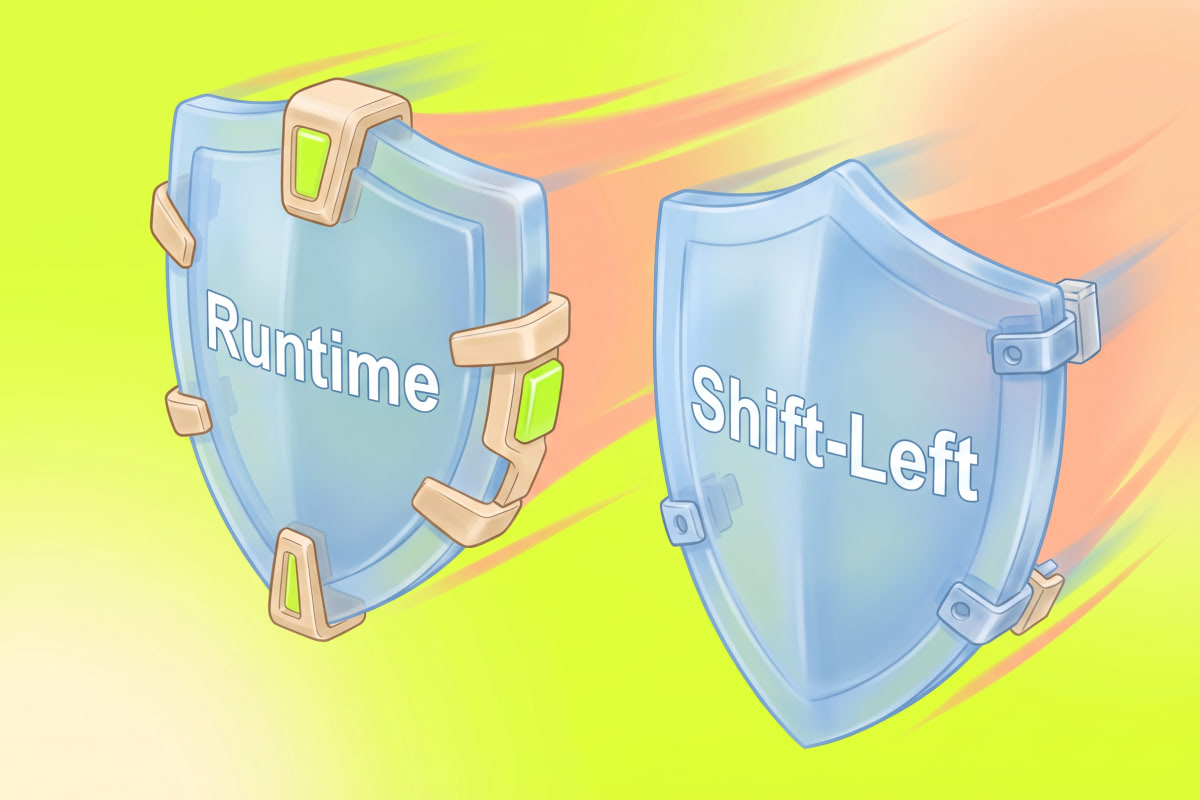
The fourth input is runtime context, which answers whether a finding is live. Sweet Security, the publisher of this guide, is one of several vendors offering runtime-focused cloud detection, supplying behavioral evidence about what a workload or identity is actually doing as an input to prioritization rather than as another source of findings. A full posture-versus-runtime category comparison is its own subject; here, runtime matters as the evidence that distinguishes a theoretical weakness from an active one.
Feeding all four into one ranking by hand is where many teams run out of capacity, which is the problem AI-based prioritization is now being asked to solve.
How AI-based risk engines reduce alert fatigue in cloud security
AI-based risk engines reduce alert fatigue in cloud environments when they make prioritization more explainable, not merely more automated. The distinction that matters operationally is between deterministic work (deduplication, normalization, correlation by resource and root cause) and probabilistic work, where a model weighs mixed evidence to propose an order. The first can run unattended. The second requires a visible rationale.
Risk-based correlation and attack path analysis
Correlation is where the gains are largest and the risk is lowest. Joining a posture finding to the identity attached to the resource, the network path that reaches it, and the behavior observed on it produces an attack path: a chain that is either complete or broken. Broken chains deprioritize themselves without anything being suppressed.
That framing changes what analysts see first. Instead of a severity-sorted list, they receive a smaller set of chains where exposure, privilege, and activity all line up, and the items removed from the top remain fully retrievable with their evidence intact. The accuracy of this approach depends directly on the completeness of the underlying inventory; paths through unmonitored assets will not appear.
AI-assisted alert prioritization and investigation
Prioritization and investigation support are where probabilistic reasoning enters, and where governance has to be explicit. A useful engine states why it raised one finding: this workload is internet-reachable, its role holds write access to production data, the asset is business-critical, and an unexpected process executed forty minutes ago. That is a reviewable argument. A number without its inputs is not.
Guardrails for AI-assisted prioritization
- Stated rationale: Every ranking change names the evidence and confidence behind it.
- Human approval: Disruptive enforcement and case closure stay with a person, not the model.
- No silent suppression: High-impact findings may be deprioritized, never hidden without a record.
- Outcome measurement: Model rankings are compared against analyst conclusions and incident results over time.
- Ongoing validation: Performance is re-measured as the estate changes, consistent with the NIST AI Risk Management Framework's characteristics of trustworthy systems, among them validity and reliability, accountability, and transparency.
Held to those conditions, AI is a reasoning aid that scales evidence assembly. Without them, it can replace one opaque queue with a faster one.
The future of alert management in cloud security
Future operations will not replace human accountability for triage decisions; they will make evidence, ownership, and response more continuous. The direction of travel is toward queues that are smaller because they are better evidenced.
From alert volume to exposure and risk management
The useful measure of a security operation is shifting from how many findings were processed to how quickly live exposure was identified and closed. Under that measure, a reduced queue is a side effect of better context, and reporting moves from throughput counts toward exposure duration and decision quality.
That shift also changes what teams expect from their estate inventory. Asset criticality, ownership, and reachability stop being enrichment fields looked up during triage and become maintained properties of the environment, which is the difference between assembling context per ticket and having it already attached.
Autonomous security operations and continuous detection tuning
Automation will keep expanding, and the forms that hold up operationally are narrow by design. Detection logic retuned as architectures change. Suppressions that expire and re-present themselves for review. Behavioral enforcement applied only to high-confidence, pre-approved cases where the action and its blast radius were agreed in advance, rather than as a blanket capability.
Everything in this guide serves one idea: alert fatigue is a context and decision-quality problem, not a count. Causes, operational costs, structural risk, enrichment sequencing, tool evaluation, and governed AI prioritization all answer a single question about any item in the queue. Does this signal represent risk that requires action now?
As cloud estates grow more dynamic, that question gets asked more often, and the evidence behind each answer matters more than the number of items it was asked about. Teams that want deeper grounding in how runtime behavior supplies that evidence can read Sweet Security's complete runtime security guide.

Cloud security alert fatigue FAQs
How CNAPPs help reduce alert fatigue in cloud security
CNAPPs reduce alert fatigue by consolidating cloud findings and adding context such as exposure, identity privilege, asset criticality, ownership, and runtime behavior. They can also correlate duplicate findings to a shared root cause so teams investigate one underlying issue rather than many separate alerts.
How can security teams identify which cloud alerts need immediate investigation?
Teams should investigate alerts first when internet exposure, a reachable attack path, meaningful identity privileges, business-critical assets, and suspicious runtime activity align. This evidence-based approach distinguishes live, consequential risk from isolated configuration findings.
What context should be included with a cloud security finding to make triage decisions faster?
A finding should include exposure, network reachability, attached identity permissions and recent use, asset criticality, runtime behavior, and the accountable owner. Together, these details let analysts assess whether the weakness is reachable, consequential, and active without manually assembling evidence.
How should teams consolidate duplicate cloud security findings tied to the same root cause?
Teams should normalize and group findings by the shared control failure, affected deployment pattern, and accountable owner rather than treating every resource-level alert as separate work. The consolidated investigation should retain links to all affected resources and evidence for auditability.
What controls should be in place before suppressing known benign cloud alerts?
Each suppression should have a clearly defined scope, documented rationale, named approver, accountable owner, and expiration date. Teams should also review expiring suppressions so temporary exceptions do not become unnoticed blind spots.
Which metrics show whether cloud alert fatigue reduction efforts are working?
Track time-to-triage, the share of findings closed without full investigation, suppression-expiry compliance, and decision reversals where an initial priority was later found incorrect. These measures show whether teams are making faster, more reliable decisions rather than merely processing fewer alerts.
Can AI safely prioritize cloud security alerts without creating new blind spots?
AI can safely assist prioritization when it explains the evidence and confidence behind each ranking, keeps findings retrievable, and never silently suppresses high-impact issues. Human approval should remain required for disruptive actions and case closure, with rankings continuously validated against analyst and incident outcomes.