The Difference between Cloud Posture & Runtime Security
Sweet team
|
November 10, 2026
Cloud posture and runtime security answer different questions. Posture evidence shows where cloud configuration diverges from intended policy. Runtime evidence shows whether that divergence is being exercised right now. This guide compares both, traces the data each relies on, and explains how to operate them together. It focuses on the major public cloud providers and container platforms; specifics vary by provider, and SaaS or on-premises estates introduce evidence sources outside this scope.
Key takeaways about cloud posture vs runtime security
- Cloud posture vs runtime security distinguishes declared cloud state from observed activity: CSPM identifies policy drift and exposure, while runtime evidence shows whether workloads, identities, or APIs are acting suspiciously.
- Cloud posture security draws on provider APIs, asset inventories, IAM policies, and network rules to reveal permitted access, but it cannot confirm whether permissions, ports, or resources were actually used.
- Cloud security runtime monitoring combines workload telemetry, audit activity, process events, and network connections to detect behavioral deviations, though baselining and tuning are necessary to manage false positives.
- In runtime cloud security vs CSPM decisions, correlated evidence helps teams prioritize active risk, investigate with shared asset context, and remediate both immediate behavior and the configuration that enabled it.
- A unified program assigns clear ownership, instruments critical workloads and identities first, introduces narrowly scoped enforcement, and measures coverage, alert quality, containment speed, and lasting policy correction.
Secure your cloud at runtime.
Continuously.
See Sweet prove where your cloud can be breached and stop it in real time, in a 30-minute walkthrough.
Understanding cloud posture vs runtime security
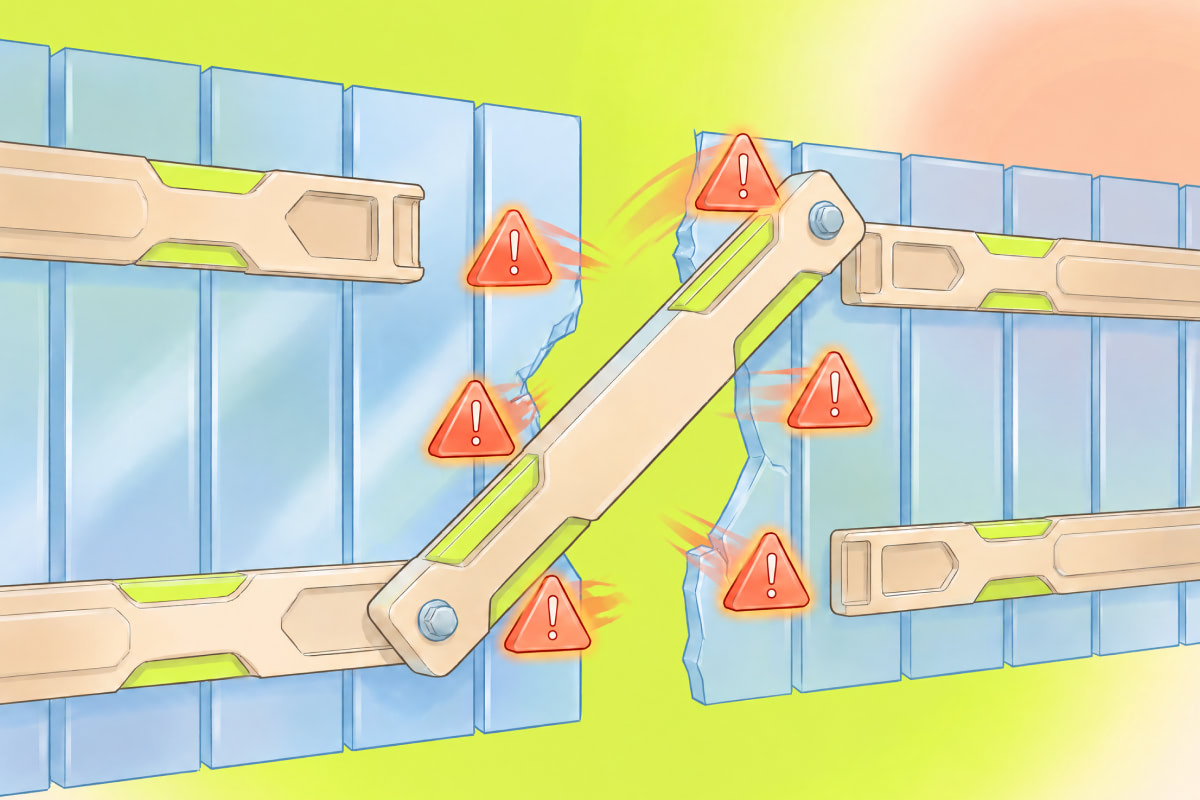
A storage bucket with public access is a configuration fact. Whether anything is currently reading from that bucket, and which principal is doing it, is a behavioral fact. Cloud environments produce both kinds of evidence continuously, and neither one can answer the other's question.
That distinction matters because cloud environments change faster than review cycles. NIST SP 800-137, Information Security Continuous Monitoring (ISCM) for Federal Information Systems and Organizations, makes the same argument in general terms: a point-in-time assessment describes the system as it was at the moment of assessment, and its accuracy decays as the system changes. In cloud infrastructure, that change is near-constant: roles are attached, security groups widen, workloads reschedule.
So teams end up holding two evidence types. Posture describes declared state, meaning what the cloud control plane says is permitted and configured. Runtime describes observed behavior, meaning what workloads, identities, and APIs actually do. Posture management was the first of the two to formalize declared state as a security discipline.
What is cloud security posture management (CSPM)?
Declared state is what CSPM reads. A Cloud Security Posture Management platform connects to cloud provider APIs, builds an inventory of resources and identities, evaluates their configuration against policy, and reports where reality diverges from the intended baseline. Published baselines such as the CIS Benchmarks and control frameworks such as the Cloud Security Alliance Cloud Controls Matrix give that baseline its shape, usually alongside organization-specific rules.
Core CSPM capabilities and use cases
Most posture platforms converge on the same functions, and each one answers a question about state rather than activity. Depth varies between products, particularly for identity analysis and multi-cloud parity.
- Asset discovery: Builds a current inventory of accounts, workloads, storage, databases, and network resources across providers.
- Configuration assessment: Compares each resource against hardening baselines and internal policy, flagging public exposure, missing encryption, or absent logging.
- Policy drift tracking: Detects when a resource that previously conformed has been changed outside the intended standard.
- IAM posture: Evaluates roles, trust relationships, and permission breadth to surface excessive privilege.
- Compliance mapping: Translates findings into control language that auditors and risk owners already use.
Together these give security and platform teams a continuously refreshed map of what the environment permits.
What CSPM can and cannot detect
A map of what is permitted is not a record of what happened. CSPM can prove that a security group allows 0.0.0.0/0 on a management port, that an IAM role carries wildcard permissions, or that a bucket policy grants anonymous read. Those are reliable facts, and they remain worth fixing whether or not anyone is abusing them.
What posture data cannot establish is use. It cannot tell you which of the role's permissions were actually called last night, whether the exposed port received a connection, or whether a process inside the workload spawned a shell. Those behaviors leave a different trace, and reading it is the job of runtime security.
How cloud security runtime monitoring works
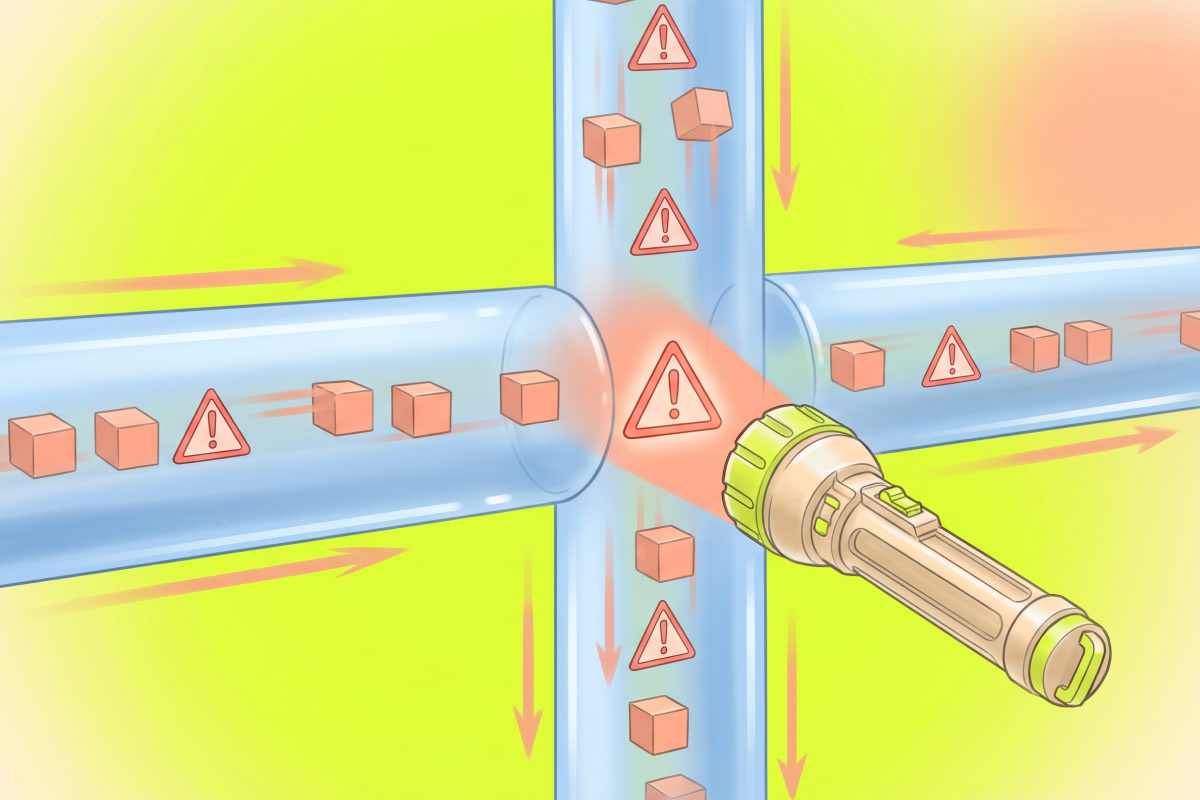
Where posture inspects declared state through the control plane, cloud security runtime monitoring observes execution. It watches processes, network connections, identity activity, and API calls as they occur, builds an expected pattern of behavior for each workload and principal, and flags deviations from that pattern as they happen rather than at the next assessment interval.
Runtime detection across workloads, identities, and networks
Runtime evidence is concrete. A container that has never run a package manager suddenly installs one. A service account that normally calls three read APIs begins enumerating IAM. A workload with no outbound history opens a connection to an unfamiliar destination. The MITRE ATT&CK Cloud matrices catalog techniques of this shape, including Valid Accounts (T1078) and Cloud Service Discovery (T1526), because the activity is indistinguishable from legitimate use in configuration data alone.
Baselines do require tuning, and behavioral detection carries a false-positive cost that configuration checks largely avoid. Legitimate deployments, migrations, and batch jobs look anomalous before a platform learns them, which is why the first weeks of continuous runtime protection go into establishing what normal looks like per workload rather than per environment.
From runtime alerts to investigation and response
Once behavior is observed, the value comes from what the team does next. The sequence is broadly consistent regardless of platform.
- Behavioral signal: An execution, identity, or network event deviates from the workload's established pattern.
- Context enrichment: The signal is joined to cloud context: account, cluster, image, owning service, and the identity in use.
- Triage decision: Analysts determine whether the behavior is expected operations, a tuning gap, or genuine attacker activity.
- Proportionate action: The response ranges from revoking a session or isolating a workload to blocking the specific behavior at its enforcement point.
That sequence produces evidence a posture scan cannot.
Runtime cloud security vs CSPM: key differences
Comparing runtime cloud security vs CSPM on features alone misses the point. The categories differ in what they observe, when they observe it, and what decision each one supports.
Preventive configuration assessment vs real-time threat detection
CSPM is preventive. It reduces the number of conditions an attacker could use, and it does so before anyone attempts to use them. Its output is a remediation backlog owned largely by the teams that build and operate the infrastructure.
Runtime security is operational. It assumes some conditions will always be exploitable and asks whether any of them are being exercised now. Its output is an investigation and, where warranted, enforcement. Neither output replaces the other: fixing a wildcard IAM policy is still correct even if no one has abused it, and detecting abuse of a compliant role is still necessary even when posture is clean.
Coverage, timing, and remediation workflows compared
Each row traces back to the same root cause: the two categories read different source data.
Cloud posture and runtime security data sources explained
Cloud posture and runtime security data sources are best organized by what the evidence proves rather than by which integration produced it. Some sources describe what the cloud permits. Others record what actually executed. Confusing the two is how teams end up believing they have behavioral coverage when they only have an inventory.
Configuration, asset, and identity data for cloud posture security
Posture evidence originates in the control plane, where each provider exposes authoritative state.
- Resource inventory: AWS Config, Azure Resource Graph, and Google Cloud Asset Inventory enumerate what exists and how it is configured.
- Identity policy: IAM roles, trust relationships, and resource policies define what a principal is allowed to do.
- Network configuration: Security groups, firewall rules, and routing define reachable paths in theory.
- Workload metadata: Cluster, namespace, image, and label data from Kubernetes describe how workloads are declared and scheduled.
These sources describe permission and exposure with high confidence, subject to API coverage gaps for newer or less common services. None of them records an executed action.
Telemetry, logs, and behavioral signals for runtime security
Executed actions surface in a different layer. Control-plane activity logs (AWS CloudTrail, Azure Monitor activity logs, Google Cloud Audit Logs, and Kubernetes audit events) record which API calls a principal actually made, turning an IAM policy from a statement of possibility into a record of use. That is the difference between knowing a role could read a bucket and knowing it did, from which address, and at what rate. Coverage depends on configuration: data-plane events such as S3 object-level access are not logged by default in every provider.
Workload telemetry adds the layer underneath: process execution, file activity, and network connections inside the running container or host, plus the API and application context that shows how a service is being called. This telemetry is what lets a team confirm whether a finding corresponds to real activity rather than theoretical reachability. Correlating it with unified cloud visibility makes the two evidence types usable in one decision.
Why combining posture and runtime security strengthens protection
Teams rarely need to choose between posture and runtime evidence in the abstract. They need to know whether a specific finding deserves attention this week, and the answer depends on both.
Prioritizing misconfigurations using runtime context
Return to the overly permissive security group. Posture establishes that it exists and that it is reachable. Runtime establishes whether anything has connected through it, whether the workload behind it is running its expected processes, and whether the identity attached to that workload is calling APIs it has never called before.
The same logic applies to the broad IAM role. Posture scores it as excessive privilege. Runtime shows which permissions were exercised during the observation window, by which principal, and under what process context, which converts an unranked backlog into a shorter list of findings that correspond to live activity. Absence of observed use is evidence of lower urgency, not of safety; the remaining findings still get fixed; they simply stop competing with active risk for attention.
Closing the gap between prevention, detection, and response
That correlation only works if the evidence path is continuous: cloud asset inventory or IAM policy → workload and audit telemetry → triage decision → scoped remediation or block → updated policy. Each handoff is where time is commonly lost, because posture findings live in one system and behavioral evidence in another.
Sweet Security is one example of a runtime approach built to keep that path intact, pairing posture context with observed behavior so enforcement acts on verified activity rather than theoretical exposure. The operating principle matters more than the tooling: enforcement should be narrow, tied to a specific observed behavior, and introduced carefully, because broad blocking rules risk disrupting production before they stop attackers.
Best practices for implementing a unified cloud security strategy
With the evidence model settled, the remaining work is sequencing. The following rollout turns the posture-and-runtime comparison into an operating model, and each step depends on the one before it.
Establish shared ownership and risk prioritization
Posture findings and runtime detections usually belong to different teams, and that split is where remediation stalls. Agree first on which assets are critical, who fixes configuration drift, who investigates behavior, and what severity justifies interrupting a release. Without that agreement, correlated evidence produces correlated arguments.
Integrate CSPM and runtime monitoring into cloud operations
- Map critical assets: Identify the accounts, clusters, data stores, and identities whose compromise would matter most, and instrument those first.
- Normalize context: Ensure workload, account, and identity identifiers resolve consistently across posture and runtime data, or correlation will fail silently.
- Set investigation thresholds: Define which behaviors trigger triage, which trigger containment, and which are expected operational noise.
- Start enforcement narrowly: Begin with low-disruption actions such as session revocation, workload isolation, or blocking one specific behavior, then expand scope.
- Feed findings back: Return confirmed runtime behavior to policy so the configuration that enabled it gets corrected permanently.
Each step produces something measurable.
Measure coverage, alert quality, and remediation outcomes
Measure coverage honestly: the percentage of critical workloads and identities producing behavioral evidence, not the number of accounts connected to a posture scan. Then measure quality: how often runtime context changed a remediation decision, and how many findings were confirmed active versus dormant.
Resist counting detections as a performance metric; detection volume reflects tuning state as much as risk. The useful questions are whether exposure was reduced, whether confirmed behavior was contained quickly, and whether the policy that permitted it was changed.
Frequently asked questions
Is CSPM enough for cloud security?
CSPM establishes whether configurations and identities conform to intended policy, which is necessary but not sufficient. It cannot observe an attacker using a valid credential, executing commands inside a container, or abusing permissions that posture considers compliant. Those behaviors only appear in runtime evidence.
Do runtime security tools replace CSPM?
No. Runtime evidence shows what is happening; it cannot enumerate dormant exposure that nothing has touched yet. An unused public bucket generates no behavior to observe, and it still needs remediation. The two categories answer different halves of the same question and are less effective when separated.
Which teams should own cloud posture and runtime security?
In most organizations, platform and cloud infrastructure teams own posture remediation because they control the configuration, while security operations owns runtime investigation and enforcement. Smaller teams often combine both roles. What matters more than the split is the handoff: both teams should work from the same asset and identity context, so a behavioral detection and the misconfiguration behind it are recognizably the same issue.
Every control discussed here, from inventory and policy assessment to identity context, behavioral telemetry, and enforcement, serves one decision: does this configuration state correspond to behavior that is actually risky right now? The more dynamic the environment, the harder that question is to answer from either side alone. For a deeper treatment of the behavioral half, see the Sweet Security runtime guide.
Cloud posture vs runtime security FAQs
What is the difference between declared cloud state and observed runtime behavior?
Declared cloud state is the configuration, permissions, and exposure defined in the cloud control plane. Observed runtime behavior is evidence of what workloads, identities, and network connections actually do during execution.
What types of misconfigurations can CSPM identify in a cloud environment?
CSPM can identify public exposure, missing encryption or logging, overly broad IAM permissions, insecure trust relationships, and permissive security group, firewall, or routing rules. It also detects policy drift from established hardening baselines and internal standards.
Which data sources provide evidence for cloud posture security and runtime monitoring?
Cloud posture security relies on provider APIs, asset inventories, IAM policies, network configurations, and workload metadata. Runtime monitoring uses audit and activity logs, Kubernetes audit events, process and file telemetry, and network connection data.
How can runtime activity help teams prioritize cloud misconfiguration findings?
Runtime activity shows whether a misconfiguration is being used, such as an exposed service receiving connections or a broad role calling sensitive APIs. This context helps teams address active risk first while continuing to remediate dormant exposures.
What runtime signals can indicate suspicious workload, identity, or network activity?
Suspicious signals include unexpected process execution, package installation, unusual file activity, abnormal API enumeration, and identity actions outside an established pattern. Unfamiliar outbound connections or unexpected traffic from a workload can also indicate risky behavior.
How should teams measure the effectiveness of a combined cloud posture and runtime security program?
Teams should measure behavioral coverage across critical workloads and identities, alert quality, containment speed, and remediation outcomes. Useful indicators include whether runtime context improved prioritization, confirmed activity was contained quickly, and the enabling configuration was permanently corrected.