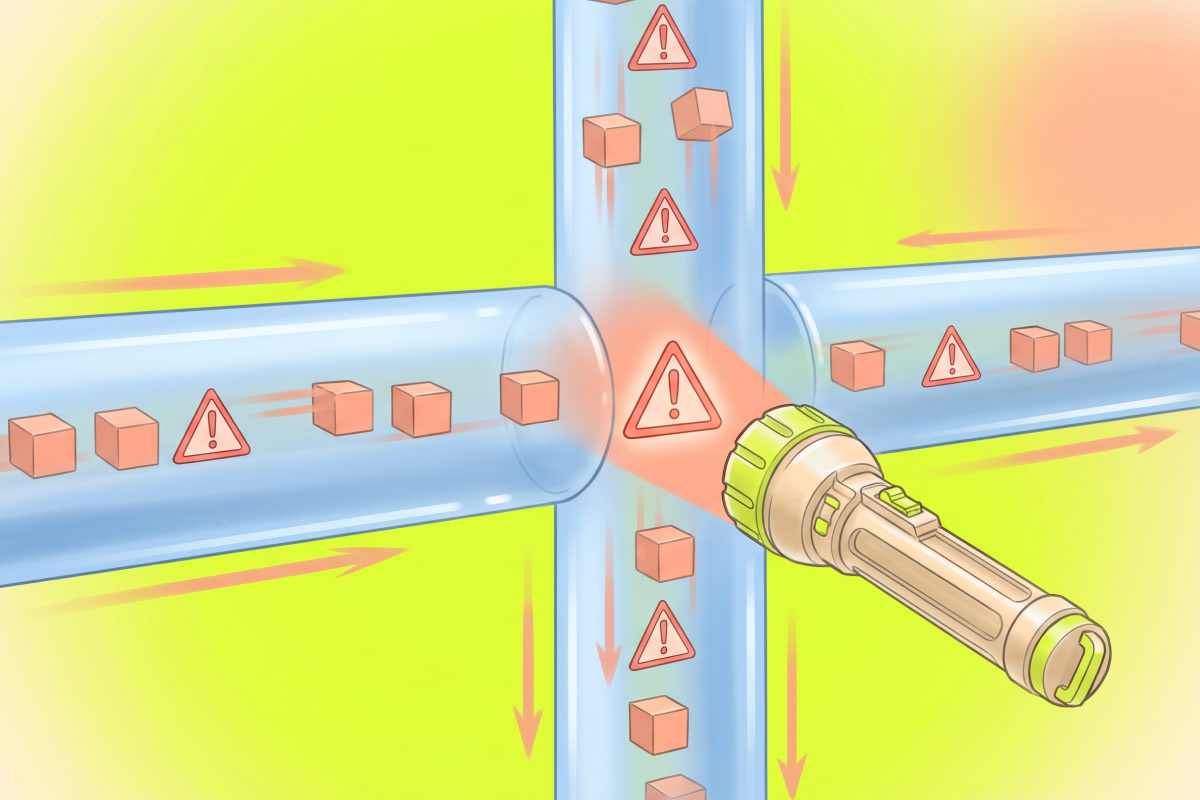
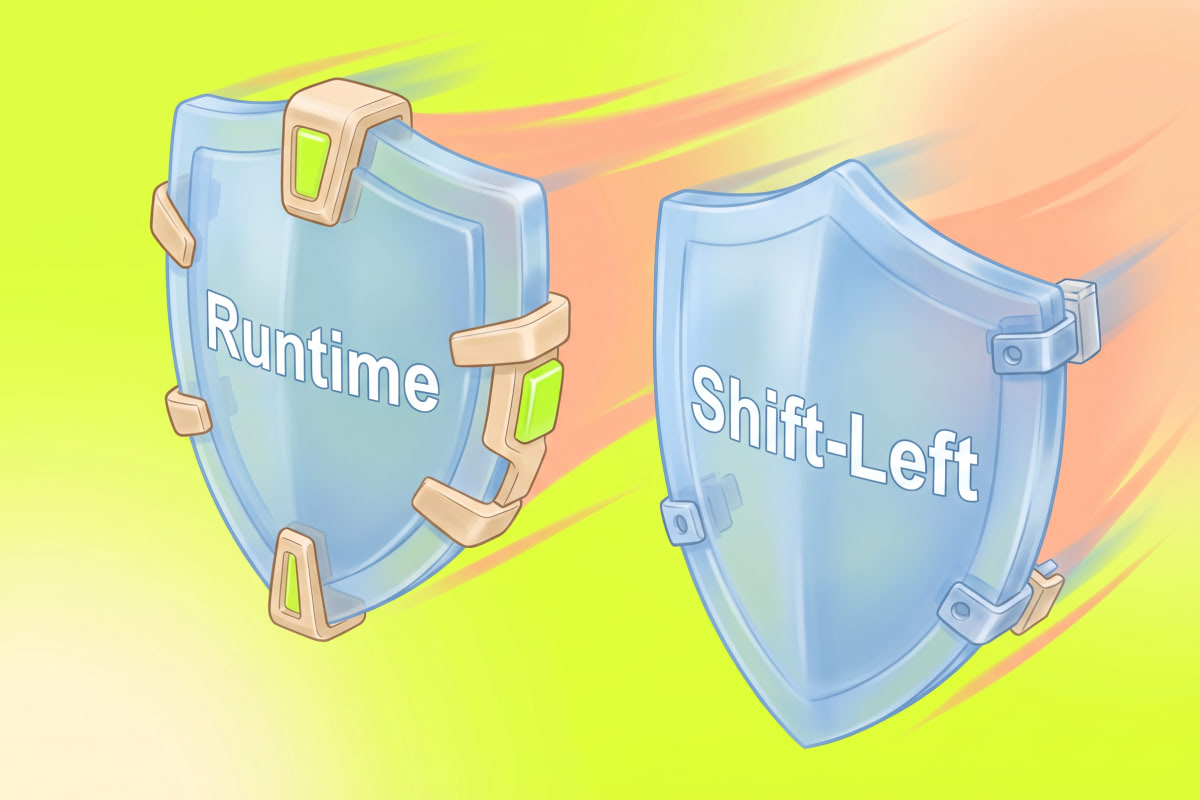
Blocking Exploit Payloads with Virtual Patching
Sweet team
|
November 10, 2026
A disclosed flaw becomes urgent the moment it is both reachable and exploitable before a fix can ship. Virtual patching exists for that interval. This guide covers what virtual patching is, how a targeted block interrupts exploit attempts in production, how it differs from real remediation, and how to retire it safely. It focuses on web and API-facing workloads; enforcement options for thick clients, embedded firmware, and air-gapped systems differ enough to warrant separate treatment.
Key takeaways about virtual patching
- Virtual patching is a temporary compensating control that intercepts a verified attack route without modifying vulnerable code, buying time for a tested vendor or application fix.
- Effective virtual patching solutions depend on selecting an enforcement point that can inspect relevant traffic, then narrowly matching exploit behavior to avoid disrupting legitimate API and web requests.
- RASP and Cloud Runtime Security add execution-level insight and production exposure context, helping teams confirm which components and routes need protection while gateway controls block requests inline.
- Known exploit payloads can be filtered by their specific request traits, but alternate routes, encoding changes, and unseen traffic mean rules reduce risk rather than eliminate it.
- A sustainable workflow assigns an owner and expiration, tests rules in observation mode, monitors false positives, deploys the durable remediation, and removes the temporary control.
Secure your cloud at runtime.
Continuously.
See Sweet prove where your cloud can be breached and stop it in real time, in a 30-minute walkthrough.
What is virtual patching?
The interval between disclosure and deployed fix is the remediation gap, and it is the only reason this control exists. Virtual patching is a compensating control that blocks a specific exploit path to a vulnerable component without changing the component's code or configuration. OWASP's Virtual Patching Best Practices guidance describes it as a security policy enforcement layer that prevents an exploit from reaching the flaw, rather than correcting the flaw itself.
The distinction matters more than it first appears. A virtual patch changes what an attacker can reach. It does not change what the application does wrong when reached.
Because the defect remains, the control has to be scoped against a known attack path, verified against real traffic, and removed once the durable fix is live. So what does a team need to know before it can write a block narrow enough to be safe?
How does virtual patching work?
Narrowing the remediation gap safely requires evidence. Before any rule is written, a team needs the affected asset and version, the reachable route that exposes it, the request or protocol characteristics an exploit depends on, the enforcement point that can see that traffic, a test plan for legitimate usage, and an expiration owner. Missing any of those turns a targeted block into a guess with production consequences.
Where virtual patches are enforced
Enforcement has to happen somewhere the malicious request is visible and decodable, which rules out several layers immediately for encrypted or internal traffic.
- Edge or CDN layer: Useful for internet-facing exposure, but blind to internal east-west calls that reach the same vulnerable route.
- API gateway: Sees structured request parameters and methods, making it a precise place to constrain a single endpoint's input.
- Host or proxy layer: Sits closer to the workload, which helps when the same service is reachable through multiple front doors.
- In-application layer: Has the most context about how input is used, at the cost of deeper integration with the application itself.
The right layer is whichever one can observe the exploit path end to end. Choosing it is only half the problem; the rule still has to match the exploit and nothing else.
Detection, rules, and blocking actions
Consider a public-facing API with a newly disclosed input-validation flaw on one route. The team confirms the route is reachable from the internet, identifies the parameter the exploit abuses, and writes a rule that rejects requests carrying that specific pattern, not all traffic to the endpoint, which would take a working feature offline to protect one defect.
Scope is the whole discipline here. Blocking a malformed parameter value is a surgical decision; blocking an entire path is an outage with a security justification. Because the rule inspects live API traffic behavior, the team can compare blocked requests against known-good usage before enforcement goes wide.
Once that block holds, it is tempting to call the issue closed. It is not, because an interim block and a fix solve different problems.
Virtual patching vs. traditional patching
The difference is one of mechanism. A virtual patch changes the attack path right now. A vendor or code patch removes or corrects the root cause, permanently. Treating the first as a substitute for the second is how temporary rules quietly become permanent risk.
Speed, coverage, and operational trade-offs
Read down the failure-mode row and the relationship becomes clear: these controls fail in different ways, which is why they belong together rather than in competition.
Why virtual patching complements remediation
A virtual patch is only defensible when a real fix is already in motion. The vulnerability stays in the queue with an owner, a target date, and a verification step, because interim enforcement does nothing for remediation tracking and ownership of the underlying defect.
The control buys scheduling freedom. Teams can patch on a tested release instead of an emergency one, provided the governance holds.
Key benefits of virtual patching solutions
Every benefit below depends on the same condition: the block is narrow, validated, and tied to a tracked fix. Without that, virtual patching delivers confidence rather than risk reduction, which is worse than doing nothing.
Reducing the window of exposure
The value is measured in exposure time, not in rules deployed.
- Faster coverage: Where the exploit characteristics are known, enforcement can be live before a vendor ships a patched version.
- Controlled release cadence: Emergency deploys introduce their own outages; a block lets the fix follow a normal test cycle.
- Scoped blast radius: A rule targeting one parameter on one route leaves the rest of the service untouched.
- Evidence for assessors: A tested, documented compensating control is defensible in a way that "we are working on it" is not. PCI DSS, for instance, accepts compensating controls only when they are documented, justified, and reviewed.
Those gains hold for systems a team can patch. They matter more for the systems it cannot.
Protecting legacy and hard-to-patch systems
Some components have no available fix: an unsupported runtime, an appliance under vendor control, a third-party service embedded in a contract. For these, the remediation gap is indefinite, and the compensating control becomes a long-term architectural decision rather than a stopgap.
That changes the governance requirement. A permanent compensating control still needs periodic re-validation, documented scope, and a named owner, because the exploit paths around it will change even when the code does not. It also raises a fair question about where this control sits relative to the other runtime defenses already in production.
Virtual patching, RASP, and cloud runtime security
These are not competing categories. They occupy different positions in the same response lifecycle, and they answer different questions about the same vulnerable route.
Comparing network, application, and runtime controls
Network and gateway enforcement, whether a web application firewall, API gateway policy, or reverse proxy rule, inspects requests before they reach the workload. Runtime Application Self-Protection (RASP) instruments the running application itself, so it can observe how input is used at execution rather than how it looks in transit. Cloud Runtime Security supplies the production context that tells a team whether the vulnerable component is live, reachable, and behaving as expected.
A virtual patch usually lives at the first layer and borrows evidence from the other two. A full RASP-versus-WAF comparison involves performance, language support, and deployment trade-offs beyond the scope of this guide.
Layering RASP with cloud runtime security
Layering matters because a block written against an exploit path is only as accurate as the picture of that path. Runtime production context confirms the component is exposed, shows which routes reach it, and makes the effect of the new rule visible, including the legitimate requests it started rejecting.
Sweet Security is one of several runtime-oriented platforms that can provide production context around enforcement while teams complete durable remediation; gateway, WAF, and RASP vendors address overlapping parts of the same problem. That context becomes decisive when the exploit is already circulating and the knowledge is incomplete.
Mitigating exploit payloads and zero-day threats
Exploitation of internet-facing applications is a well-documented attacker behavior, catalogued in MITRE ATT&CK as T1190, Exploit Public-Facing Application. The practical defense question is narrower than the technique: which specific characteristics of an attempt can be matched reliably without matching ordinary traffic too?
Blocking known exploit payloads
When public proof-of-concept code exists, exploit payloads are observable. Teams can extract the parameter, header, method, or encoding the attempt depends on, and write enforcement against that behavior rather than against a vague category of malicious activity.
Precision has limits worth stating plainly. Payloads can be re-encoded, split across requests, tunneled over a protocol the enforcement point does not parse, or delivered through an alternate route it never sees. A virtual patch reduces immediate exploitability; it does not confer immunity, and no rule should be documented as if it does. Those limits sharpen when the vulnerability has no patch at all.
Using compensating controls for zero days
With a zero-day, the remediation gap opens before complete knowledge exists, so the decision to enforce rests on conditions rather than certainty.
- Credible exploit path: There is specific evidence of how the flaw is triggered, not just that it exists.
- Confirmed exposure: The affected component is reachable from a network an attacker can use.
- Scopable control: The exploit characteristics can be matched without rejecting normal requests.
- Rollback readiness: The rule can be reverted quickly if legitimate traffic breaks.
If any of those four is missing, broader containment is usually the better call: isolating the workload, restricting network reachability, or disabling the affected feature. Whichever path a team takes, the discipline around the control determines whether it helps or quietly becomes debt.
Virtual patching best practices and common pitfalls
The operational proof that a temporary control stays temporary is simple: someone owns it, it was tested, and it has a defined end state. Most virtual patching failures are governance failures, not technical ones.
Prioritize vulnerabilities by exploitability and exposure
Not every finding deserves a compensating control. The ones that do are reachable, exploitable, and present in production, which is why CISA's Known Exploited Vulnerabilities Catalog, and exploitability signals such as EPSS scores, are more useful starting filters than CVSS severity alone. CVSS base scores describe intrinsic severity, not whether a given instance is reachable in your environment.
Filtering this way keeps the number of active rules small. A small set is one a team can validate and retire; a large set is one nobody reviews.
Test, tune, and monitor patch rules
Virtual patch lifecycle sequence
- Scope the exploit path: Identify the asset, version, reachable route, and the request characteristics the exploit depends on.
- Run in observation mode: Evaluate the rule in detection-only mode against live traffic before enforcing, and review what it would have rejected.
- Validate legitimate usage: Confirm normal requests, integrations, and automated clients still succeed.
- Enforce and record: Turn on blocking, attach the rule to a ticket, asset owner, and expiration date.
- Deploy the durable fix: Ship the vendor or code patch through a normal, tested release.
- Verify and retire: Confirm the defect is gone, then remove the rule and document the removal.
Steps five and six are the ones most often skipped, and skipping them creates the pitfall that undoes everything above.
Avoid treating virtual patching as a permanent fix
An unretired rule accumulates cost. It constrains future legitimate functionality, hides the fact that the defect is still present, and eventually gets inherited by an engineer who has no idea why it exists. Virtual patching complements upstream secure development and vendor patching; it does not replace either.
A vulnerability is dangerous because it is reachable before the fix lands, and the purpose of a temporary block is to shorten that interval, not to avoid patching. Exploit-path scoping, targeted enforcement, production validation, durable remediation, and rule retirement are five parts of one sequence, and each answers the same question: is this specific attack path still open right now?
For the broader picture of how enforcement and production context fit together, read the complete runtime security guide.
Virtual patching FAQs
How to implement virtual patching with WAF?
Implement virtual patching with a WAF by identifying the affected route and exploit-specific request traits, then deploying a narrowly scoped blocking rule in observation mode before enforcement. Validate legitimate traffic, assign an owner and expiry, and track the underlying software fix separately.
When should an organization use virtual patching instead of waiting for a software fix?
Use virtual patching when a vulnerability is reachable and exploitable but a tested software fix cannot be deployed immediately. It reduces exposure during the remediation gap and should operate alongside, not instead of, durable remediation.
What information is needed to create a safe virtual patch rule?
A safe rule requires the affected asset and version, reachable route, exploit-dependent request or protocol characteristics, and an enforcement point that can inspect the traffic. Teams also need a legitimate-traffic test plan, a rule owner, and an expiration date.
Can virtual patching protect legacy systems that cannot be updated?
Yes, virtual patching can protect legacy or unsupported systems by blocking known exploit paths without changing the vulnerable component. Because the underlying flaw remains, the control needs documented scope, periodic validation, and a named owner.
How can teams reduce false positives when blocking exploit payloads?
Teams can reduce false positives by matching the specific parameter, header, method, or encoding an exploit requires rather than blocking an entire endpoint or broad traffic category. Run the rule in detection-only mode first and review it against known-good requests, integrations, and automated clients.
Can virtual patching help mitigate a zero-day vulnerability?
Yes, virtual patching can mitigate a zero-day when there is credible evidence of an exploit path, confirmed exposure, and a control that can be scoped without disrupting normal requests. If those conditions are unavailable, broader containment such as restricting reachability or disabling the affected feature may be safer.
When should a virtual patch be removed after remediation?
Remove a virtual patch after the durable vendor or code fix is deployed and verified to eliminate the defect on the protected systems. Document the removal so temporary rules do not become unmanaged long-term controls.