CDR & Cloud Threat Investigation Explained
Sweet team
|
November 9, 2026
Cloud platforms record nearly everything, and the records rarely explain themselves. A cloud threat investigation turns scattered evidence (identity sessions, control-plane calls, workload behavior, object access) into one chain that shows who acted, what changed, what was reached, and whether it was expected. This guide covers the methods, tools, evidence handling, and CDR context behind that work. Service names, default retention periods, and available log fields differ by provider and change over time, so confirm the specifics here against current provider documentation for your environment.
Key takeaways about cloud threat investigation
- Cloud threat investigation connects identity sessions, API activity, workload behavior, and data access into a verifiable timeline, separating a detection signal from evidence of who acted, what changed, and what was reached.
- Reliable cloud security threat investigation methods begin by confirming the signal, resolving the responsible principal, setting a deliberate time window, and tracing activity across accounts, regions, resources, and data stores.
- Effective cloud threat investigation tools reduce uncertainty by collecting complete telemetry, correlating sessions and requests, reconstructing event order, preserving artifacts, and documenting queries, hypotheses, findings, and response decisions.
- Cloud Detection and Response, CNAPP, and Cloud Access Security Brokers add valuable context, but cloud security threat investigation evidence from audit, runtime, and data-access records is needed to prove actual activity.
Secure your cloud at runtime.
Continuously.
See Sweet prove where your cloud can be breached and stop it in real time, in a 30-minute walkthrough.
What is cloud threat investigation?
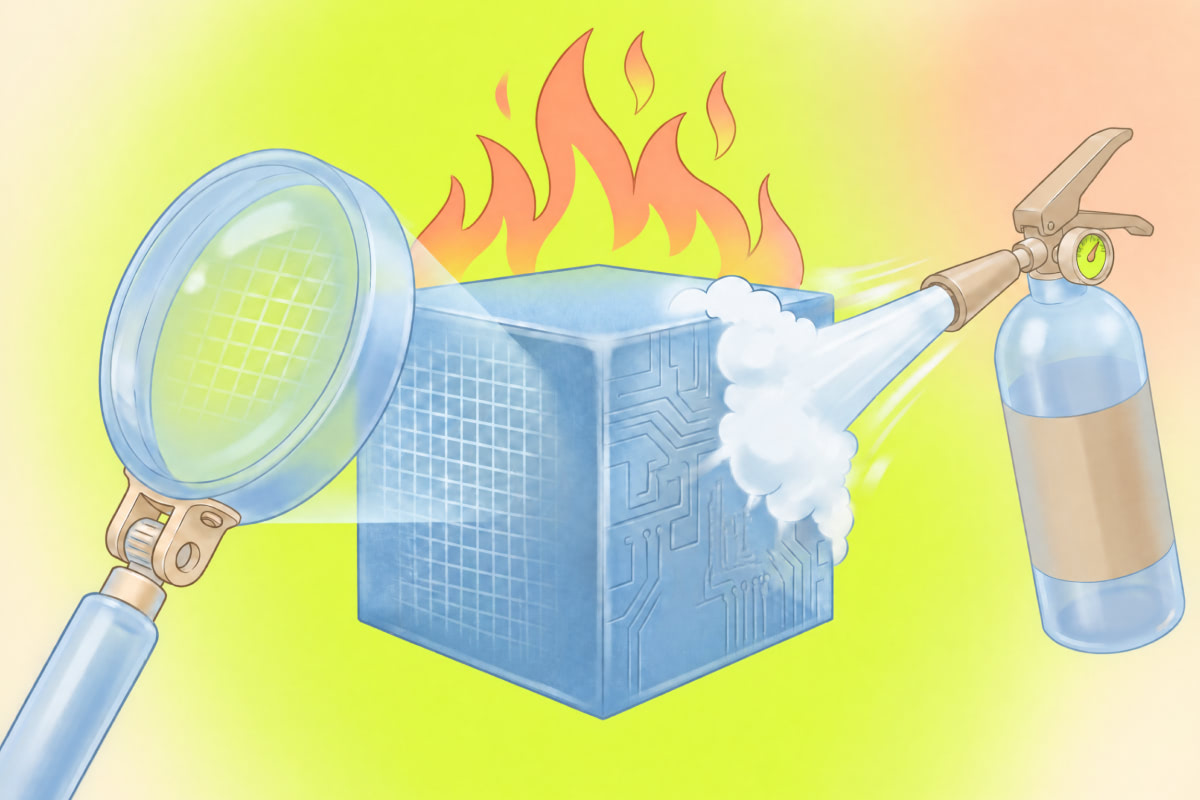
Cloud threat investigation is the reconstruction of actual behavior across identities, control-plane APIs, workloads, and data stores after a signal suggests something went wrong. It is rarely a search problem. The records usually exist; what is missing is the relationship between them. A role assumption in an identity log, a burst of API calls in an audit trail, and a spike in object reads in a storage log are three unrelated facts until an investigator proves they belong to one session, one actor, and one time window.
That distinction separates detection from investigation. Detection produces the trigger; the investigation decides what the trigger means. Answering it requires evidence from several systems, assembled into a single account that someone else can verify later.
Four questions a reliable investigation answers
- Actor: Who acted — which identity, session, and credential initiated the behavior.
- Change: What that actor modified across configuration, policy, and resources.
- Reach: Which data stores or services the actor actually touched.
- Expectation: Whether any of that behavior was normal for that identity and workload.
Cloud behavior is not self-evident, and the reasons are structural.
Understanding cloud security threats and risks
What makes cloud behavior hard to read is speed and distribution. Identity is the connective tissue between resources, workloads live for minutes, and a single API call can change the blast radius of an account without touching a server. Attackers exploit that ambiguity directly: many cloud intrusions consist entirely of authenticated API activity that, viewed one event at a time, looks like ordinary automation.
Common cloud attack paths and indicators of compromise
Cloud attack paths rarely announce themselves as intrusions; each step is a legitimate operation performed by an identity that was permitted to perform it. MITRE ATT&CK's Enterprise matrix covers IaaS, SaaS, and Identity Provider platforms, and catalogs these patterns largely as sequences of valid API and authentication activity rather than malware events.
- Credential exposure: A leaked access key, token, or CI secret used from a new source location or unfamiliar user agent.
- Role chaining: A session assuming a second, broader role than the workload normally requires, often across accounts.
- Control-plane abuse: Policy edits, key creation, trust-relationship changes, or logging configuration changes made outside deployment pipelines.
- Data collection: Bucket or database enumeration followed by sustained read volume against resources the identity never touched before.
- Persistence: New users, long-lived keys, or federation changes created after the initial access event.
Any one of these indicators can be explained away. The sequence is what carries meaning, which is why investigators chase the thread rather than the individual event.
Shared responsibility and investigation blind spots
The shared responsibility model also decides what evidence you can ever obtain. Providers retain hypervisor and platform-level telemetry you will not receive; you retain control-plane, identity, workload, and data-access records, but often only with the retention and verbosity you configured in advance. An investigation started today can only reach as far back as yesterday's logging decisions.
Three gaps surface repeatedly. Data-plane access logging is frequently off by default and separately billed: AWS CloudTrail data events for S3 object-level activity, for instance, are not captured unless explicitly enabled. Default retention on high-volume sources is often short. CloudTrail's console Event history covers roughly 90 days without a configured trail, and Azure Activity Log entries are retained about 90 days unless exported, while Google Cloud's Admin Activity audit logs are kept considerably longer by default. And ephemeral workloads frequently disappear before anyone captures their process or network context. Cloud logging guidance from CISA and from the providers is written to close those gaps before an incident.
Blind spots set the outer limit of what can be proven. Within that limit, method determines how fast you reach a defensible conclusion.
Core cloud security threat investigation methods
Effective cloud security threat investigation methods share one move: the investigator states a hypothesis, then tests it against records from independent sources. Take a working example that runs through the rest of this guide: a role assumption from an unfamiliar network, followed by unexpected API calls and storage enumeration. The hypothesis is not "this is malicious." It is "a single session performed these actions within this window," which is a claim evidence can confirm or kill.
Alert triage and scoping affected cloud resources
Triage fails when it tries to judge intent before establishing boundaries. Scope first, interpret second.
- Signal validation: Confirm the triggering event is real and not a known automation pattern, maintenance job, or duplicated record.
- Actor resolution: Resolve the event to a concrete principal — user, role, session name, and the credential that initiated it.
- Time boundary: Set an initial window from first anomalous action to last observed activity, then widen it deliberately rather than guessing.
- Resource scoping: List every account, region, workload, and data store the resolved principal touched inside that window.
- Hypothesis statement: Write the claim the evidence must support, in one sentence, before pulling more data.
With a scoped window and a named actor, the investigation can move across sources without losing the thread.
Identity, workload, and network investigation workflows
Identity is where most cloud investigations begin, because it is the only attribute that persists across services. Session attribution matters more than account naming: an assumed role shows the role's identity in the audit record, so the original caller, source IP, session name, and request IDs are what tie separate actions back to one actor.
Workload evidence answers what identity records cannot. Audit logs show that an API call was made; process and network context from the workload shows which binary made it, from which container, and whether that behavior matched how the service normally runs. When a key is used by a legitimate service account, that runtime context is frequently the only thing that separates a deployment from an intrusion.
Network records then validate direction and volume. Flow records, egress destinations, connection timing, and transfer sizes either corroborate the storage enumeration in the hypothesis or contradict it, and a contradiction is as useful as a confirmation because it narrows scope. Flow logs typically show connection metadata rather than payloads, so they bound volume without proving what data moved.
Threat hunting across multi-cloud environments
Hunting across multiple providers adds a translation problem on top of the analysis problem. The same behavior — assume a role, enumerate storage, read objects — carries different event names, field structures, and timestamp conventions in each cloud. Without normalization, cross-cloud correlation becomes manual and slow.
Practical hunts therefore work from behavior rather than vendor event names: unusual role assumptions per identity, first-time API calls per principal, and data reads that exceed an identity's historical baseline. Those hypotheses transfer across providers. Executing them at speed depends on the technology layer underneath.
Essential cloud threat investigation tools and technologies
Judge cloud threat investigation tools by one standard: how much uncertainty they remove from a timeline. Feature counts and detection volume are poor proxies, because an investigation stalls on missing relationships, not missing findings.
Investigative functions a toolset must support
- Telemetry collection: Capturing identity, control-plane, workload, network, and data-access records with sufficient retention and field fidelity.
- Correlation: Linking records from separate services to one principal, session, and request chain.
- Timeline reconstruction: Ordering those linked events on a normalized clock so causality is visible.
- Evidence preservation: Exporting immutable copies with provenance that survives the investigation.
- Case workflow: Recording hypotheses, queries run, findings, and decisions so conclusions can be reviewed.
Most environments satisfy some of these functions natively and the rest through integration.
Cloud-native logging, monitoring, and audit services
Provider-native services are the foundation of the evidence chain because they are authoritative. Control-plane audit services such as AWS CloudTrail, Azure Activity Log, Microsoft Entra sign-in logs, and Google Cloud Audit Logs record the API calls themselves; identity services supply session and credential attribution; storage and database access logs record object-level reads. Each provider documents which fields are guaranteed, which are best-effort, and which require explicit enablement.
Their limitation is scope. Native services describe the control plane faithfully and the inside of a workload barely at all, and they rarely correlate across accounts or clouds on their own. Aggregation layers fill that gap.
SIEM, SOAR, and extended detection and response integrations
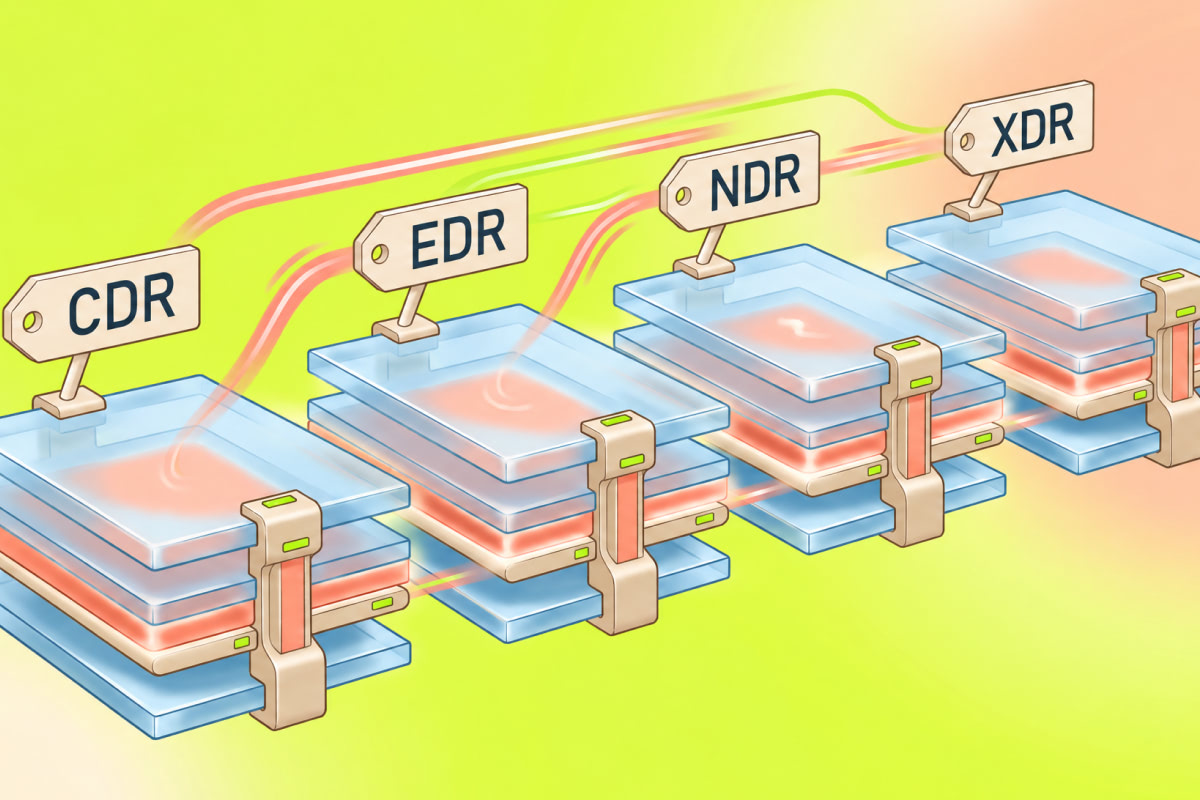
A SIEM contributes retention, normalization, and cross-source query: the ability to ask one question of five log sources. SOAR contributes repeatability, turning evidence collection and approved containment steps into actions that execute the same way every time. Extended detection and response integrations contribute workload and endpoint context that cloud audit records omit.
None of these layers decides what happened; they shorten the distance to the answer. And the answer only holds if the records behind it can still be produced, intact, weeks later.
Gathering and preserving cloud threat investigation evidence
Preservation is what makes a timeline defensible rather than merely persuasive. NIST SP 800-61, the Computer Security Incident Handling Guide, treats analysis and documentation as inseparable: a conclusion is only as strong as the records supporting it and the account of how they were obtained. In cloud environments that pressure is sharper, because the underlying resources may be destroyed by normal autoscaling before anyone requests them.
Cloud security threat investigation evidence sources
Cloud security threat investigation evidence comes from four layers, and the running scenario touches all of them. Mapping artifacts to the question each one answers prevents an investigation from over-reading a single source.
| Evidence layer | Representative artifacts | Question it answers | ||||||
|---|---|---|---|---|---|---|---|---|
| Identity | Role assumption events, session name, source IP, credential ID, MFA status | Who acted, and under what authority | ||||||
| Control plane |
| Supporting source | What it establishes | What it cannot establish alone |
|---|---|---|
| CNAPP | Configuration, exposure, permissions, and vulnerability context | Whether the exposure was used |
| Cloud Access Security Brokers | SaaS app usage, sanctioned access, dataUsing CNAPP findings to prioritize investigation riskCNAPP findings are most useful as prioritization input at the start of an investigation. In the running scenario, knowing the assumed role carried wildcard permissions on three storage accounts tells the investigator where to look first and how large the potential blast radius could be. That is scope hypothesis, not scope proof. The finding narrows the search; object-level access records decide whether anything was read. A permission that was never exercised leaves no data-access evidence, and the investigation should say so explicitly, while noting whether the relevant data-event logging was enabled at the time. Absence of logging is not absence of access. CASB visibility for SaaS activity and data exposureCloud Access Security Brokers extend the same logic into SaaS, where the control plane belongs to someone else. CASB records of unusual downloads, external sharing, or OAuth grants can connect a compromised cloud identity to data movement outside the provider environment, a dimension native cloud audit logs never see. Here too, the record is contextual. A sharing event confirms exposure of a file; it does not confirm which session triggered it unless identity attribution ties the two together. That distinction is what keeps the timeline honest. Best practices for strengthening your cloud threat investigation processThese practices help the evidence chain survive a real incident, when the people involved are tired and the clock matters. Centralize telemetry and normalize cloud logsCentralization is an evidence decision before it is an architecture decision. Route identity, control-plane, workload, network, and data-access records into one queryable location, with retention set long enough that an investigation beginning months after initial access still has something to read. Retention length is a cost tradeoff, and high-volume data-event logging is usually where that tradeoff is decided. Normalization matters just as much. Map principal identifiers, request IDs, resource identifiers, and timestamps into consistent fields across providers, using an open schema such as OCSF, so a single query follows a session everywhere it went. Teams that skip this step rebuild the same joins manually during every incident. Automate containment with approved response playbooksContainment belongs after scope is established. Revoking a session too early can erase behavior you still need to observe, and may tip off an actor who holds other credentials. Pre-approved playbooks resolve that tension by defining in advance which actions are safe at which confidence level.
Test investigation readiness through cloud incident exercisesExercises are the only reliable way to find out whether the chain holds. Simulate the scenario this guide followed — a role assumption, unexpected API calls, storage enumeration — and measure how long it takes to name the actor, bound the window, prove or disprove data access, and export preserved evidence. Gaps show up as missing log sources, denied access, or expired retention, all of which are fixable before an incident. Cloud environments will keep producing more records than any team can read, which is why a cloud threat investigation is defined by reconstruction rather than retrieval. The question behind every method, tool, and evidence practice here is the same: can you show who acted, what they reached, and whether that behavior was expected? As environments become more automated and identity-driven, that answer depends increasingly on behavioral evidence captured while it still exists. The Sweet Security runtime guide covers one approach to adding runtime context to that evidence chain. 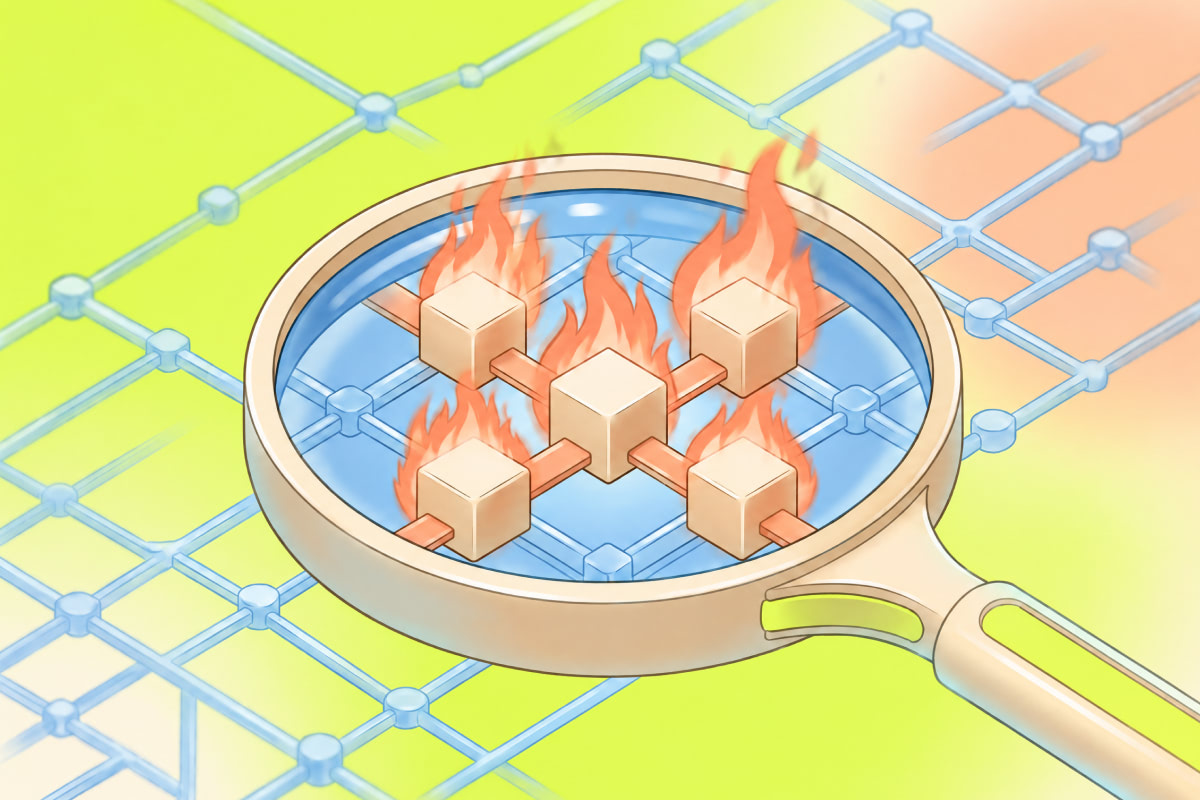 Cloud threat investigation FAQsHow do investigators link a cloud identity session to API calls, workload activity, and data access?Investigators correlate the principal, session name, credential ID, source IP, request IDs, and timestamps across identity, audit, runtime, and data-access records. This creates a normalized timeline that ties an assumed session to the actions it performed and the resources it reached. Which cloud logs should be enabled to investigate suspicious role assumptions or credential use?Enable identity and sign-in logs, control-plane audit logs, workload runtime telemetry, network flow records, and relevant data-plane access logs. Object-level storage and database access logging is especially important because control-plane records alone may not show whether sensitive data was read. What evidence can show whether a cloud identity actually accessed sensitive data?Object-level storage reads, database query or access records, file-download events, and resource identifiers can show that an identity reached specific sensitive data. Identity-session and audit records must then tie those events to the suspected principal and time window. How can security teams determine the full scope of a suspected cloud incident across accounts and regions?Teams should resolve the responsible identity, establish an initial time window, and query normalized telemetry for that principal, its sessions, credentials, request IDs, and related resources across all accounts and regions. They can then expand or narrow scope using corroborating workload, network, and data-access evidence. What information should be preserved first when investigating activity on an ephemeral cloud workload?Preserve the workload's process lineage, container image and configuration, lifetime, active connections, relevant logs, and associated identity-session and audit records before it disappears. Export these artifacts with timestamps, provenance, and integrity protections so the evidence remains verifiable. How does Cloud Detection and Response help analysts investigate cloud threats faster?Cloud Detection and Response connects identity, workload, and resource context to a detection so analysts can validate an assembled activity chain instead of manually pivoting among isolated logs. It accelerates triage and scoping, but still depends on complete audit, runtime, and data-access telemetry. You may also be interested in Sweet Security is redefining enterprise cloud protection. As the leading provider of Runtime CNAPP and AI Security solutions, Sweet unifies runtime context with advanced AI intelligence to protect the modern enterprise. Stay updated © Sweet 2026    |