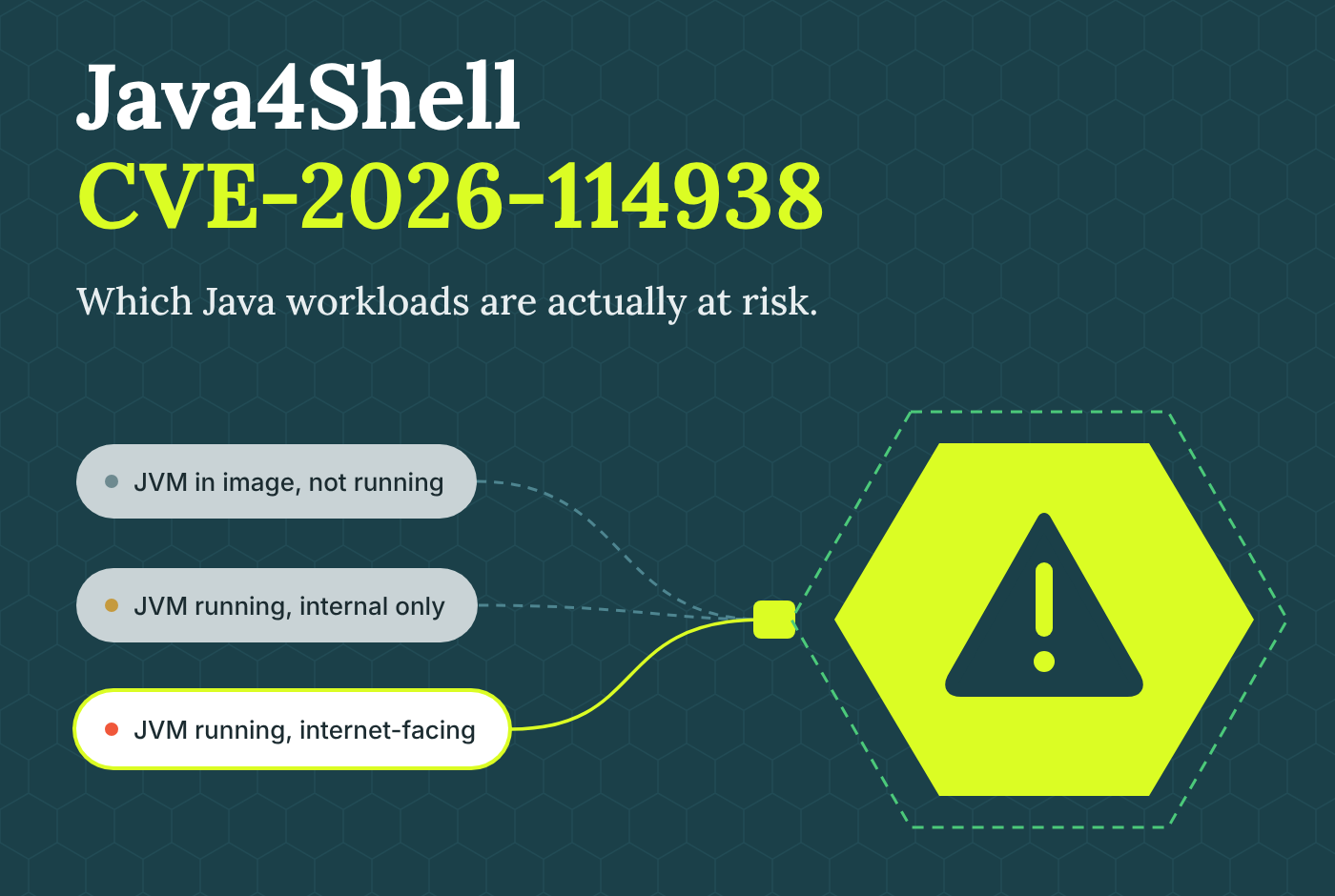
In the four weeks between Oct. 21 and Nov. 18, researchers using AI found critical flaws in PHP, Apache HTTP Server, Java and NGINX, four of the most widely used pieces of software on the internet. Each one can let an attacker run their own code on a server without logging in.
Attackers moved just as quickly. Amazon's threat intelligence team saw attempts to exploit PHP2Shell, the pair of PHP flaws, on Oct. 17. That was four days before the flaws were made public. The same week brought Node2Shell, a critical flaw in the Brotli decoder that ships with Node.js. Within a week, CISA had added both to its Known Exploited Vulnerabilities (KEV) catalog, the government's list of flaws attackers are actively using.
AI is also making these flaws cheaper to find and use. Calif, one of the research teams that found PHP2Shell, says one of its researchers found Java4Shell in about an hour using OpenAI's Codex. He built a working exploit two hours later, for less than $200 in AI costs. Five research teams found the NGINX flaws on their own, and every one of them built a working exploit. Across the industry, VulnCheck counted 45% more CVEs published in the first half of 2026 than in the six months before. In that same period, 23.43% of the vulnerabilities attackers exploited showed signs of exploitation on or before the day they were made public.
Every one of these disclosures forces security teams to answer the same question: Are we affected? Sweet Threat Intel helps you answer it quickly, however often it comes up.
Shrink the Window Attackers Count On
You can't fix a vulnerability until you know where it is, and finding it is harder than it sounds.
Take PHP. Depending on how it was installed, it shows up under different package names, such as php-fpm or php-cli, so searching for one name misses the others. Node.js is often built right into a container image instead of being installed like a normal package, which makes it easy to miss. Teams end up searching by hand across several tools, and anything they miss stays vulnerable.
Even once you've found everything, you still don't know what to fix first. The NGINX and Apache flaws can only be exploited when HTTP/2 is turned on, so a version number alone can't tell you whether a server is at risk. A vulnerable server the internet can't reach can wait. One that's receiving internet traffic right now can't. A list of installed software can't tell you which is which.
Know What's Running, Not Just What's Installed
To answer "are we affected?" quickly, you need three things:
- Word of the threat the day it's disclosed
- A way to find every copy of the vulnerable software, however it was installed
- Visibility into which of those copies are running and receiving traffic from the internet
With all three, a long list of maybes becomes a short list of workloads to fix today. The third is the hardest, because a list of installed software can't give it to you. It comes only from watching your workloads as they run. That's why Sweet is runtime-first. Lightweight eBPF sensors show which processes are running on your workloads, what software they load and what traffic reaches them, and everything Sweet does starts from that data.
See Every Major Threat the Day It Breaks
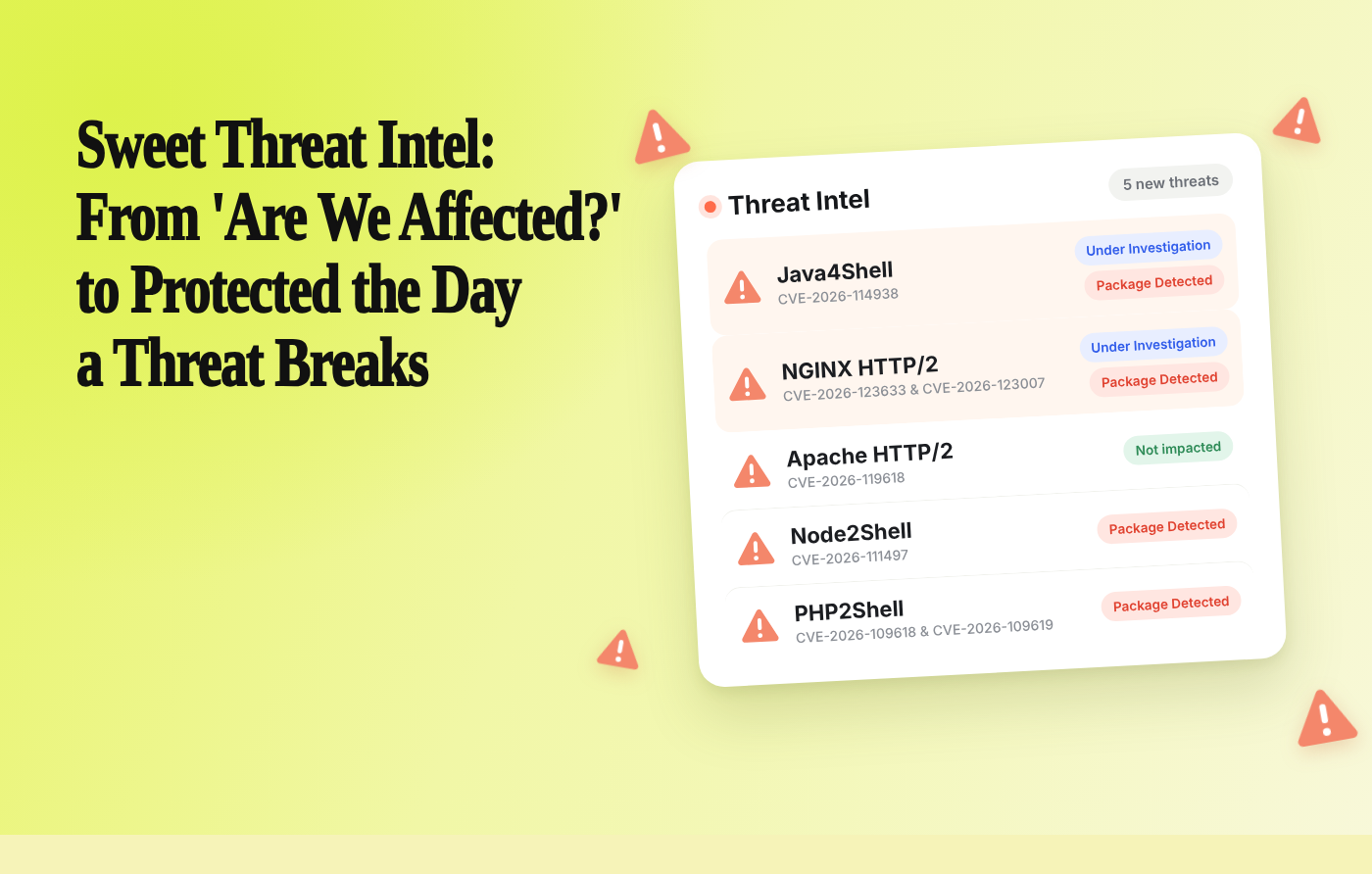
Sweet Threat Intel gives you one feed of major threats, and you get a notification when a new one is added. In the feed below, Java4Shell and the NGINX HTTP/2 flaws are both marked Under Investigation. That label means Sweet is still tracking the threat while its researchers confirm the details, starting with exactly which versions are affected. Behind the scenes, an AI agent watches for new disclosures, writes up each threat and updates it as new information comes out. A Sweet researcher approves every change before you see it.
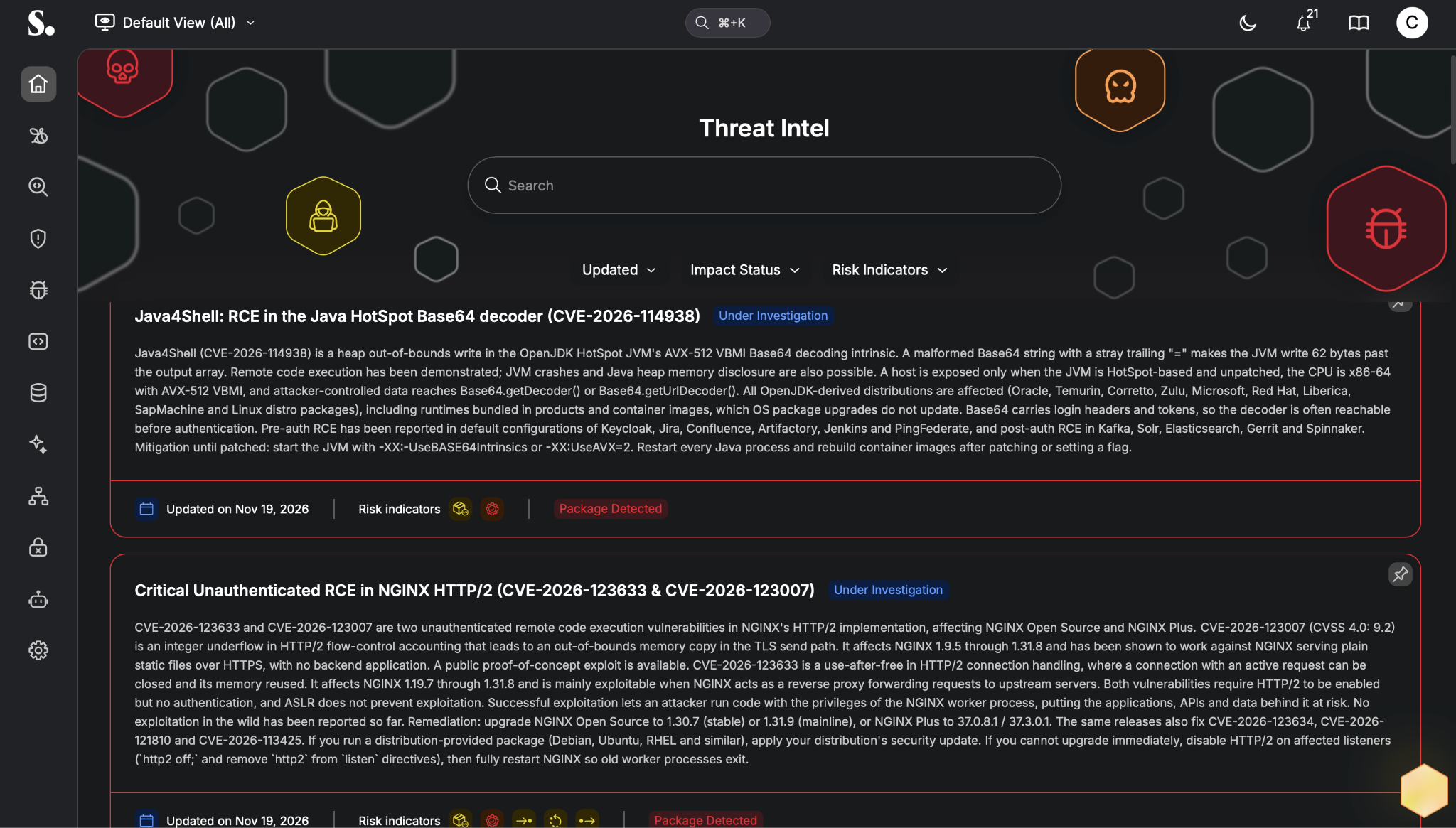
As soon as the affected versions are confirmed, Sweet checks them against the runtime data it already has from your environment. The threat card then shows either Package Detected or Not impacted, even while the threat is still Under Investigation, so you don't wait for the next day's report.
Find Every Affected Workload, Including the Ones That Are Easy to Miss
One threat entry covers every name the vulnerable software goes by. In the Java4Shell example below, the affected Java runtime shows up as temurin, Eclipse's build of OpenJDK. Sweet finds it whether it was installed normally or copied into a container image. Each threat's Detection Criteria lists exactly which versions are affected and which versions fix the problem. Sweet checks your environment against that same list, so what you read is exactly what Sweet looks for.
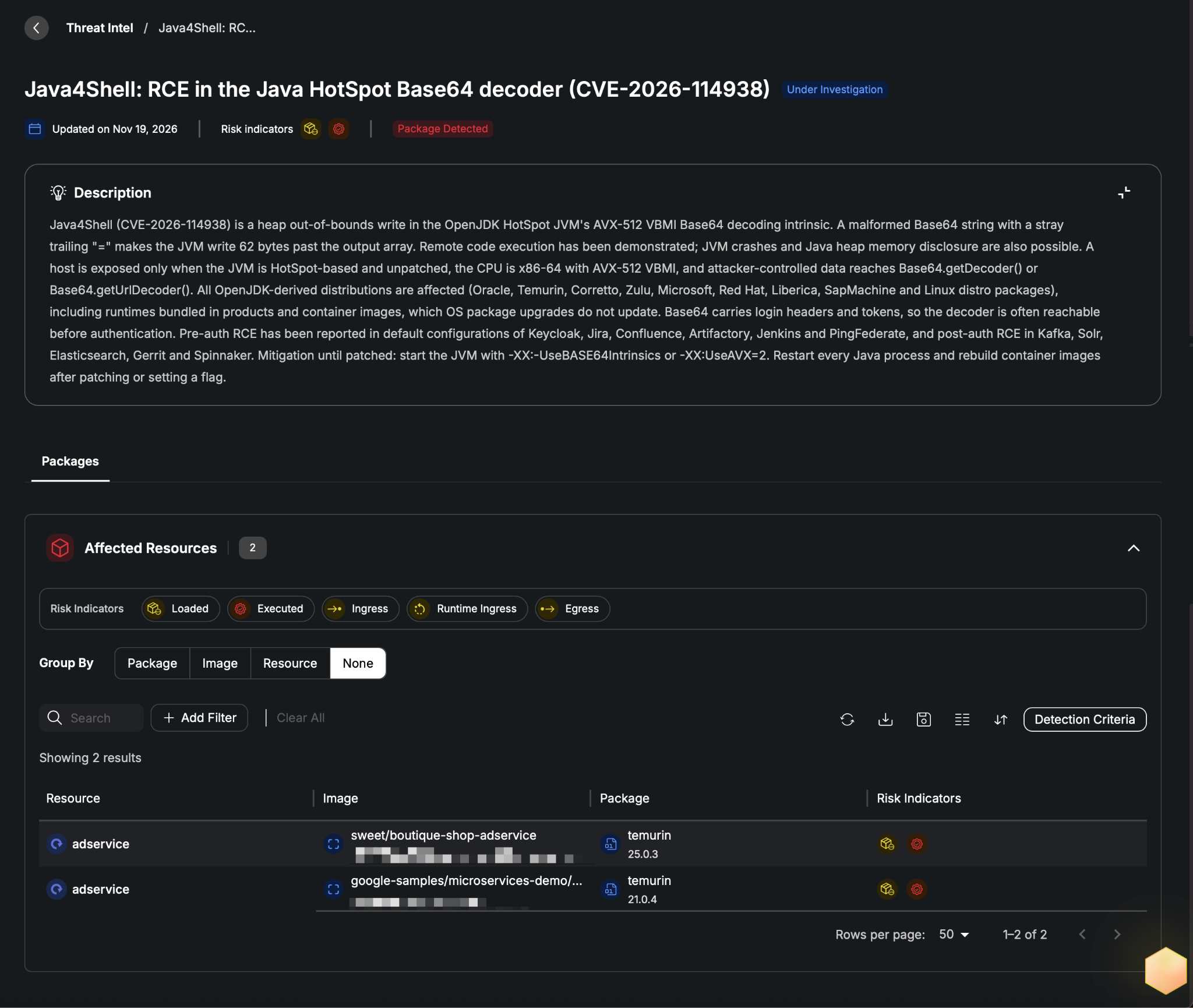
Affected Resources then lists every workload and container image that has the vulnerable software. It shows whether that software is actually loaded and executed, and whether the workload has Runtime Ingress, meaning it's receiving traffic from the internet right now, not just reachable from it. It uses the same software inventory view you already use in Sweet. In addition, each vulnerability carries the same Sweet Score you see in Sweet's Vulnerability Catalog, so your priorities stay consistent.
Fix the Workloads Attackers Can Reach First
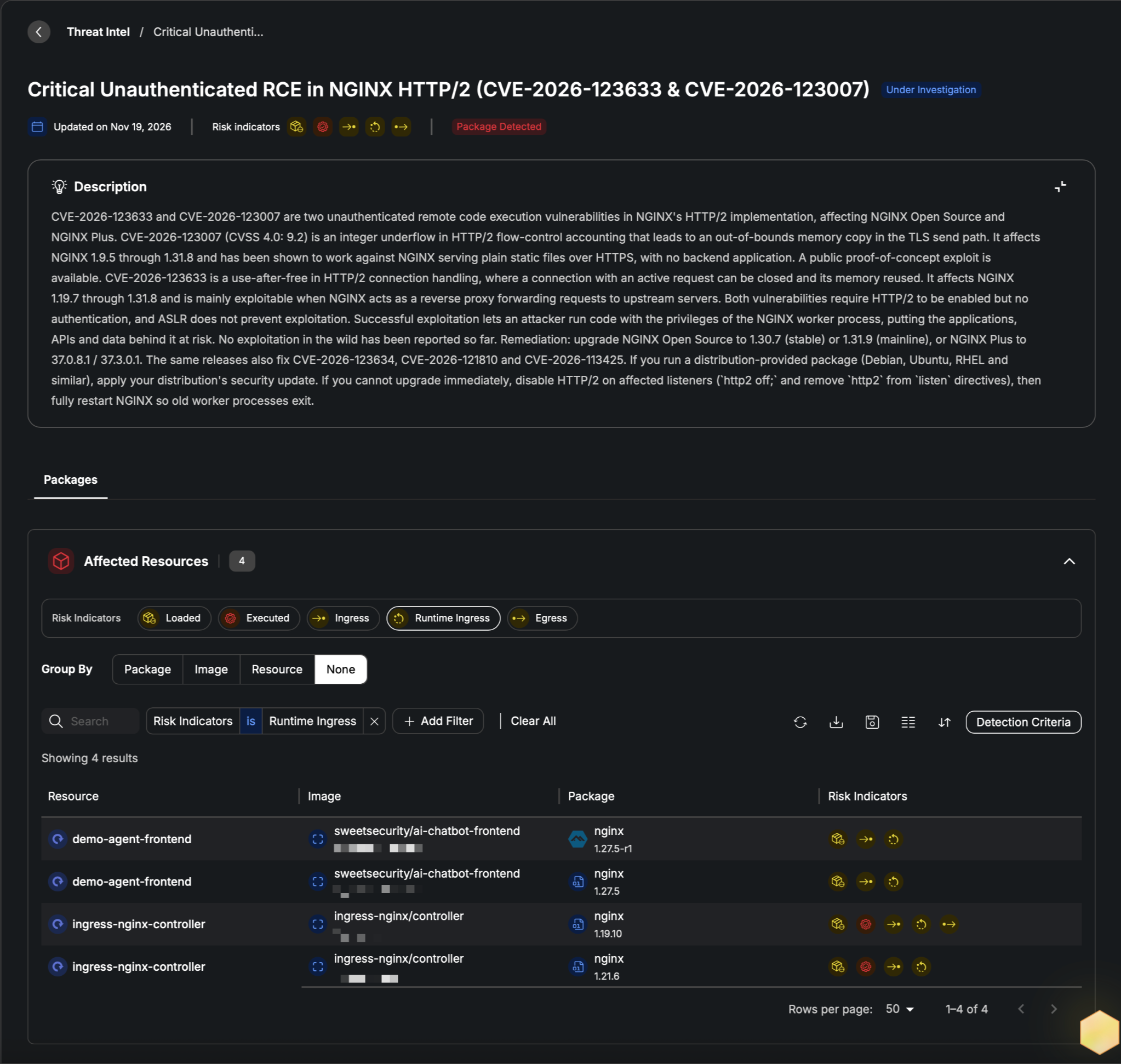
Each threat card shows whether the vulnerable software is loaded, running, making outbound connections and reachable from the internet. Because Sweet bases this on live traffic, not configuration, one filter takes you from "we run NGINX somewhere" to "NGINX is handling public requests on these four workloads." Those four get fixed first.
Stay Protected Until the Fix Is Deployed
Upgrading every affected workload takes time. Some can't be updated right away because of release freezes, dependency conflicts or limited engineering time. Because Sweet is runtime-first, it can protect those workloads, not just report on them. With one click, Sweet Virtual Patching blocks attempts to exploit the vulnerable code at runtime while normal traffic keeps flowing. It needs no code changes or redeploys, and you can turn it off just as easily. Virtual patching doesn't fix the vulnerability, and you still need to upgrade to a patched version. It protects the workload until you do, so your engineers can roll out the real fix on their normal schedule instead of in a rush. To see it in action, watch the recording of "The Race to Patch: Inside a Real HTTP2Shell Attack," where we use Virtual Patching to block a Node2Shell exploit while developers finish the fix.
Attack Before You Defend
Responding faster matters, but if response is the only thing you do, you're always racing a clock you can't beat. In chess, a player who spends every move answering threats never gets to carry out a plan of their own. The other side sets the game. Security works the same way. To get ahead, you have to make the first move and make the attacker react to you.
Sweet's Attack, Fix, Defend loop lets you make the first move, and like everything else in Sweet, it runs on runtime data:
- Attack: Sweet Attack uses AI to test your cloud environment the way an attacker would. What sets it apart is where it starts. Sweet Attack works from the same runtime data Sweet has already collected and indexed from your environment: what's running, what's receiving internet traffic, which identities and permissions are in use and how your services talk to each other. It doesn't start cold or guess from configuration files. It proactively proves which attack paths work in your environment as it runs today, so you can close them before an attacker finds them.
- Fix: Virtual Patching protects vulnerable workloads at runtime. Permission scoping, based on the permissions your workloads actually use, limits what an attacker could reach while your team rolls out upgrades.
- Defend: When malicious activity happens, Sweet sees it instatly and defends in real time by ending malicious processes, quarantining containers and running your response playbooks.
Threat Intel tells you where you stand the day a threat breaks. Attack, Fix, Defend means the next one has less to reach. Because every step runs on the same runtime data, each one builds on the last instead of starting over. To see how it works in your environment, request a demo.