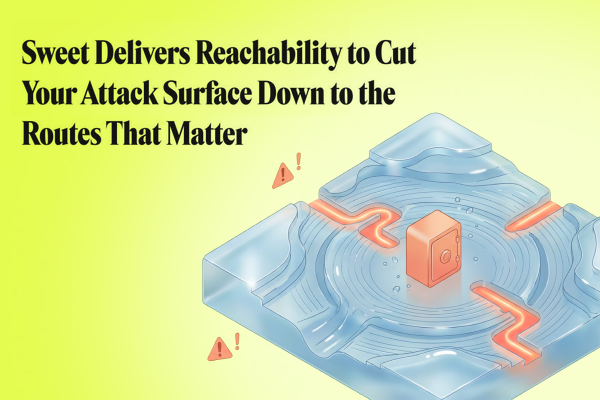
We're excited to introduce Reachability, a new capability that enables security teams to see exactly how the internet reaches, or is configured to reach, each workload running in their cloud environment. For every exposed asset, Reachability shows each route from the internet to that asset and the evidence behind it. Instead of working through a flat list of rules, teams can see every real way in and focus on the routes that put their most important workloads at risk.
Turning an Endless Backlog Into a List You Can Finish
Reducing the internet-facing attack surface is a priority for nearly every security program, and for good reason: an attacker can't exploit what they can't reach. However, very few teams can say precisely what their attack surface looks like today, which parts of it to cut first or whether last quarter's work actually made it smaller.
The challenge isn't effort. It's the list most teams work from. The attack surface they can see is a configuration inventory that lists every firewall rule, network setting and access policy that could let the internet in, each one on its own. Exposure rarely comes from a single rule, though. A route from the internet to a workload is often the result of several policies and rules working together, and a flat inventory can't show how they combine. That leaves teams with a backlog they can't finish and progress they can't measure.
Consider a workload a developer opened to the internet for a quick test. The test ends, but the access rule stays, and the workload joins every other asset flagged as exposed. Some of those assets receive internet traffic every day, while others sit behind protections that make them difficult to reach. The inventory treats them all the same.
This is a familiar scenario for most security teams. Attack surface reduction only becomes practical when teams can see their exposure the way an attacker does: as a finite set of real routes from the internet to something worth reaching.
Understand What's Exposed and Why It Matters
Reachability describes your exposure as routes. Each route is a concrete path from the internet to a workload that shows every asset sitting between the edge of your environment and the workload itself.
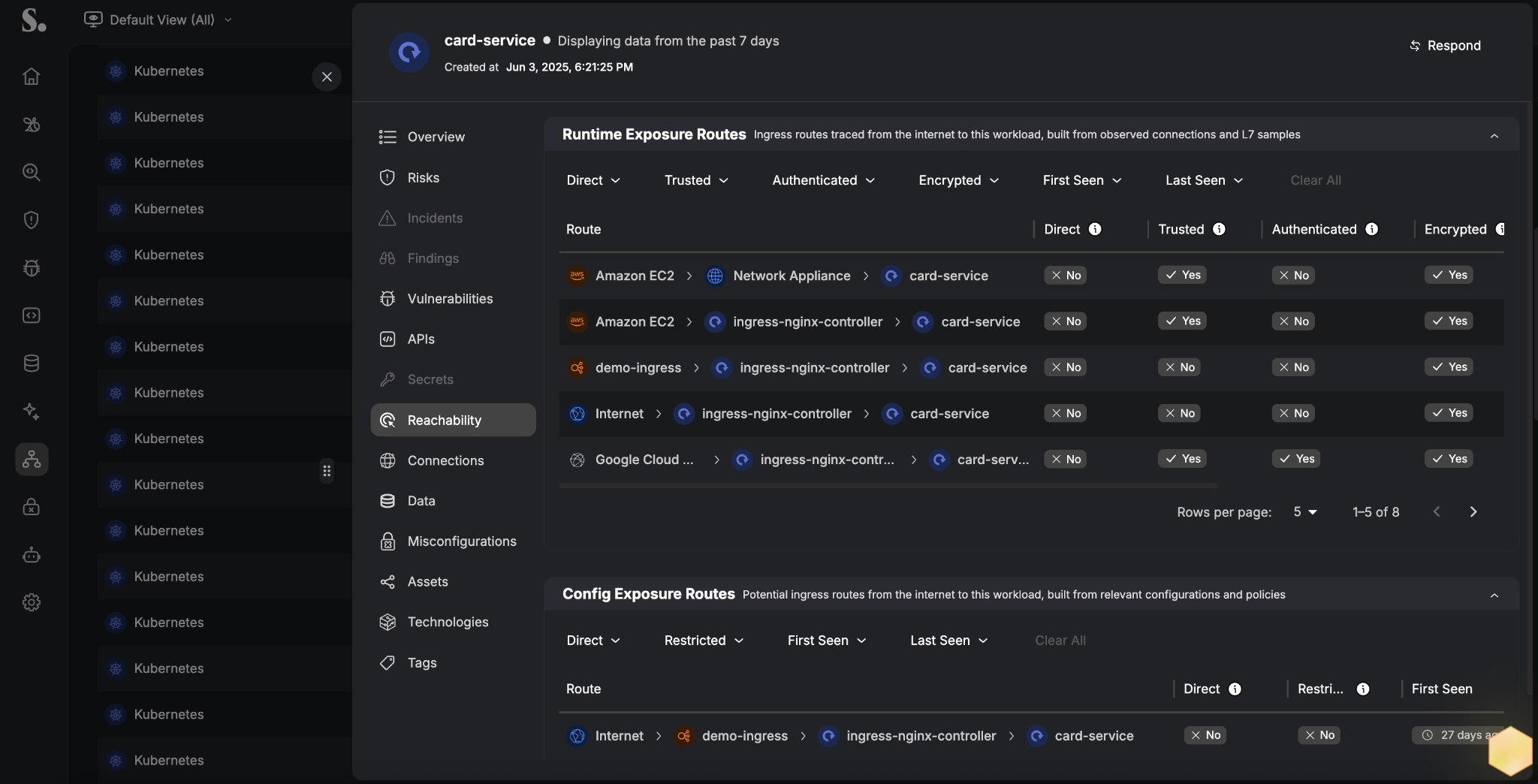
Security teams don't judge their attack surface by how many assets are exposed. They judge it by which important assets are exposed and how. Reachability shows how. Sweet brings each workload's security data into the same view, so you can see what's exposed and what's at risk in one place.
Every route is built on evidence, not assumption, and Reachability provides two kinds:
- Runtime routes reflect traffic Sweet has actually observed arriving from the internet. They prove the route is in use and show where an attacker could already be.
- Configuration routes reflect what your policies and rules allow, regardless of whether traffic has actually passed through them. They show every way an attacker could get in, including the workload left open after that quick test.
Teams need both. Runtime routes show what's being used today. Configuration routes show every potential way in, including the ones no one has tried yet, so you can close them before an attacker finds them.
See Exactly How Each Workload Is Exposed
For configuration routes, Reachability shows which policies and rules make each asset part of the route. Your team can then decide where it makes the most sense to close the route and change the policy or rule responsible. For runtime routes, Reachability shows every asset the traffic passed through on its way to the workload.
This gives security and engineering a shared starting point. When security brings a route to the team that owns the application, the conversation starts with evidence rather than a finding to debate.
Shrink Your Attack Surface Faster, With Less Work
With Reachability, teams can:
- Focus on the routes that matter. Reachability shows what's exposed and how. Sweet's security data shows which of those workloads are worth an attacker's time. Together, they narrow your work to the routes that reach important workloads.
- Address the most exposed routes first. A route that reaches a workload directly, with nothing in front of it, leaves your defenses nowhere to sit. A route that passes through a recognized security service, such as a web application firewall, and carries authenticated, encrypted requests is far harder to use. Because each route carries that context, you can prioritize by how exposed a route truly is rather than treating a protected route and an open one as the same ticket.
- Measure progress with evidence. When your attack surface is a defined set of real routes, "we reduced exposure this quarter" becomes something you can demonstrate. Fewer runtime routes, fewer direct and unauthenticated routes and fewer routes to sensitive workloads can be counted before and after and shared with leadership or auditors.
Final Thoughts
As cloud environments grow more complex, security teams need more than a flat list of rules. They need to know every route from the internet to their workloads and which routes matter most. Reachability delivers that clarity, turning attack surface reduction into a program teams can run and measure.
See It in Action
Reachability is available now to all Sweet customers. If you'd like to see how it fits into your environment, schedule a customized demo with our team.