



Every major shift in technology forces security teams to rethink how they operate. Virtualization changed where applications ran, the cloud changed how infrastructure was built and deployed - and AI is changing software itself. Applications can now reason, invoke tools, make decisions, and adapt their behavior after they're deployed.
Today's environments are in a constant state of change. Engineering teams deploy continuously, infrastructure scales automatically, and AI agents can gain entirely new capabilities through configuration alone. Modern applications are expected to evolve after they're deployed, and many of those changes have security implications that didn't exist before.
With this in mind, security has largely continued to operate the same way it always has. When those new environmental changes occur, someone has to determine whether they introduce risk, whether existing controls are still appropriate, and whether new policies need to be created. That operating model made perfect sense when environments evolved at a pace people could reasonably keep up with. It's becoming much harder to sustain in environments that change continuously - and it has led to the rise of policy debt.
The Security Team Is Becoming the Policy Team
Downstream of innovation, every meaningful change in an environment eventually becomes a security decision, “Should this workload be allowed to communicate with that service? Should this API return that data? Should this identity have access to that resource? Should this AI agent be allowed to invoke that tool?” None of those questions are unusual on their own. The challenge is that modern environments generate them constantly.
For years, the answer was straightforward. A security engineer evaluated the change, determined whether it introduced risk, created or modified a policy, tested it, deployed it, and maintained it over time. That process wasn't inefficient; it reflected how infrastructure changed. The problem isn't the process. It's the volume.
Cloud infrastructure, APIs, identities, and AI systems now evolve faster than security teams can realistically evaluate every change. Existing policies gradually drift away from the environments they were written to protect while new behaviors appear faster than new controls can be created. Over time, security teams spend less of their effort reducing risk and more of it maintaining the growing collection of policies those environments require.
That's policy debt. Like technical debt, policy debt accumulates gradually. Every new application, integration, identity, API, and AI capability adds another decision that someone eventually has to make. The result is an ever-growing backlog of policies that need to be written, reviewed, updated, and maintained simply to keep pace with production.
Not Every Policy Starts with Business Intent
It's tempting to view every security policy as the same problem, but they aren't all created for the same reason. Some policies begin with business intent. An organization decides customer data should never leave a particular environment. A production database should never be accessible from the public internet. An AI agent should never delete production resources without approval. Those policies represent business decisions, regulatory requirements, or organizational risk tolerance. They should remain exactly where they belong: with people.
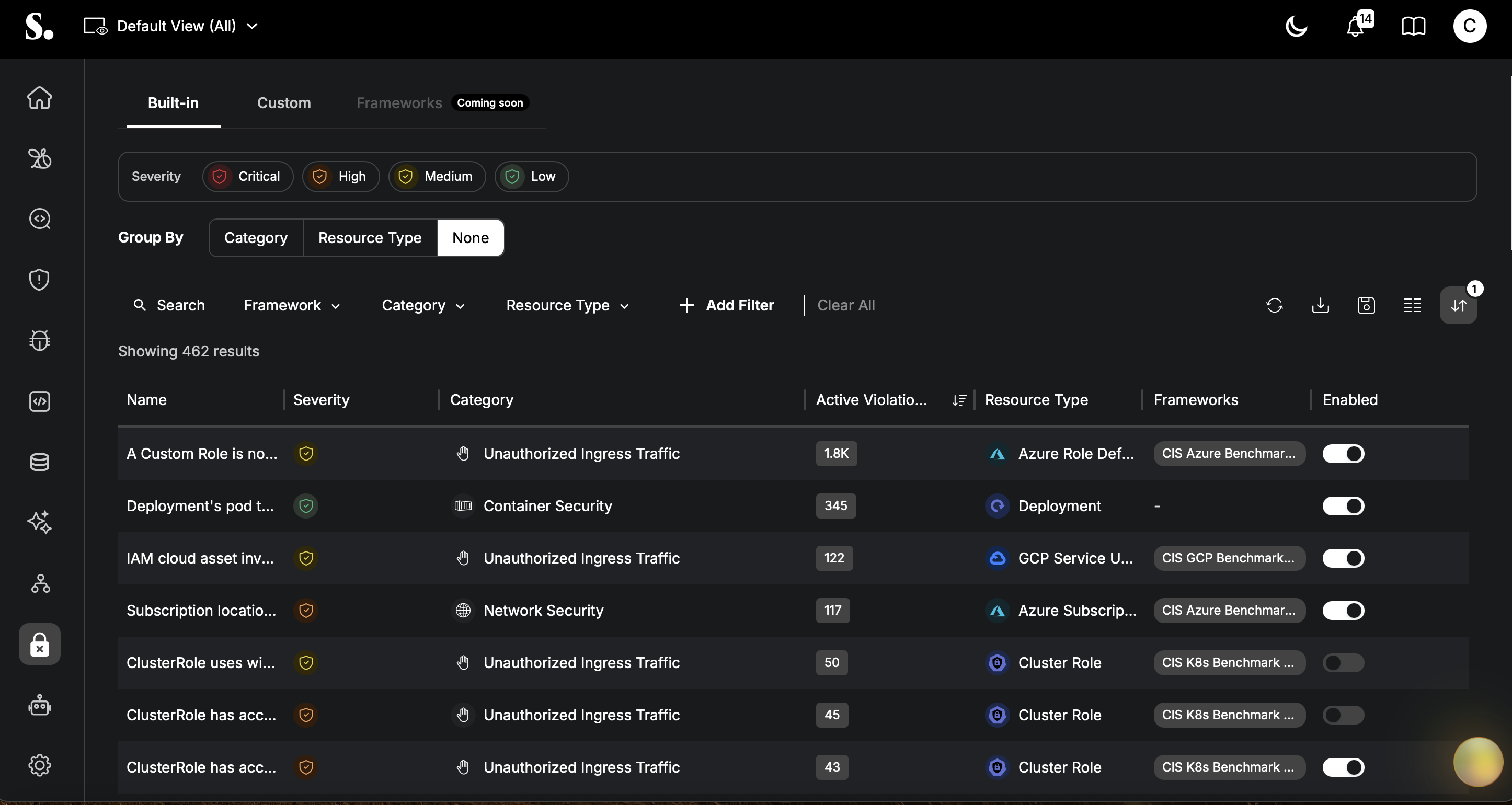
Other policies don't begin with a business decision at all. They begin because production changed - an API starts exposing data it has never returned before, an application begins communicating with infrastructure it has never contacted, a service account starts assuming permissions outside its historical behavior, an AI agent gains access to a new tool and begins using it in ways nobody anticipated. None of those changes necessarily indicate malicious activity, but they do raise an important question: does the environment now require a new control?
That's a fundamentally different problem. The challenge isn't deciding what the business wants. It's recognizing that production has changed in a way that may require the security posture to change as well.
Runtime Creates the Missing Context
This is where much of the conversation around AI-generated security policies misses the larger opportunity. Generating policy syntax is rapidly becoming a solved problem. Large language models are already capable of translating an engineer's intent into the correct policy language. That makes writing policies faster, but it doesn't answer the harder question: what protection should exist in the first place, and how can it be introduced without disrupting production?
That answer doesn't come from documentation or static configuration. It comes from understanding what's actually happening inside production.
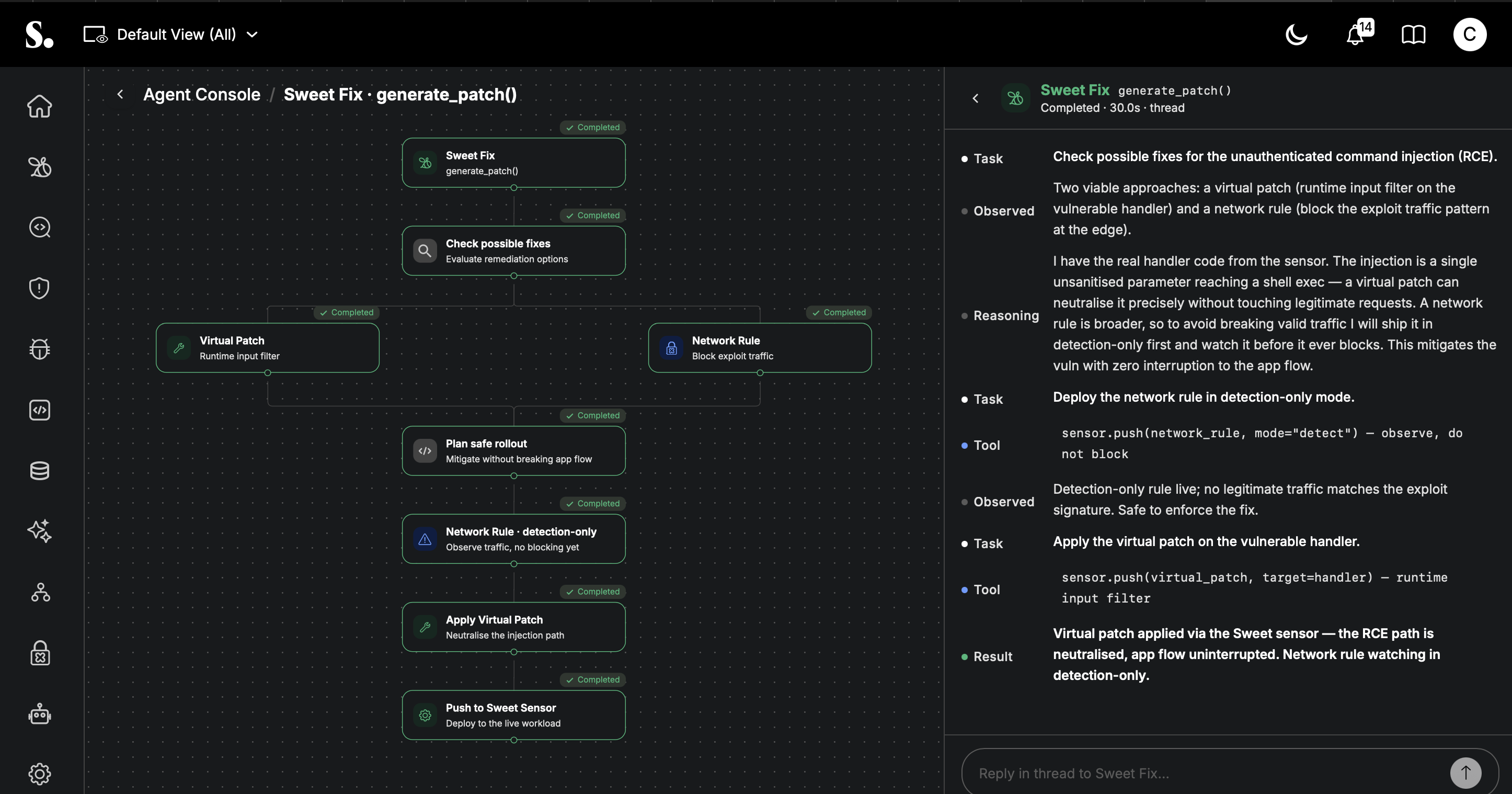
Runtime information reveals how applications communicate, how APIs are being used, how identities behave, what AI agents are doing, what data they're accessing, and how those behaviors change over time. With that context, security teams are no longer starting from a blank page every time production evolves. Sweet can determine what kind of protection is appropriate, validate it against real application behavior, and safely introduce it into production = whether that means a policy, a runtime guardrail, a virtual patch, or another control.
Human judgment doesn't disappear. Security teams still decide whether a recommendation aligns with business intent and organizational risk. Runtime simply provides the context that allows those decisions to be made far more efficiently than manually investigating every change across a constantly evolving environment.
From Policy Debt to Continuous Protection
Policy debt isn't eliminated by giving security teams another place to write policies. It's reduced by shrinking the amount of manual work required to keep security aligned with production. That's the philosophy behind Sweet’s Learning Loop.
Rather than treating runtime as another source of alerts, Sweet continuously learns how cloud workloads, APIs, identities, and AI systems actually behave. That runtime understanding powers a continuous cycle of proactive validation, remediation, and protection.
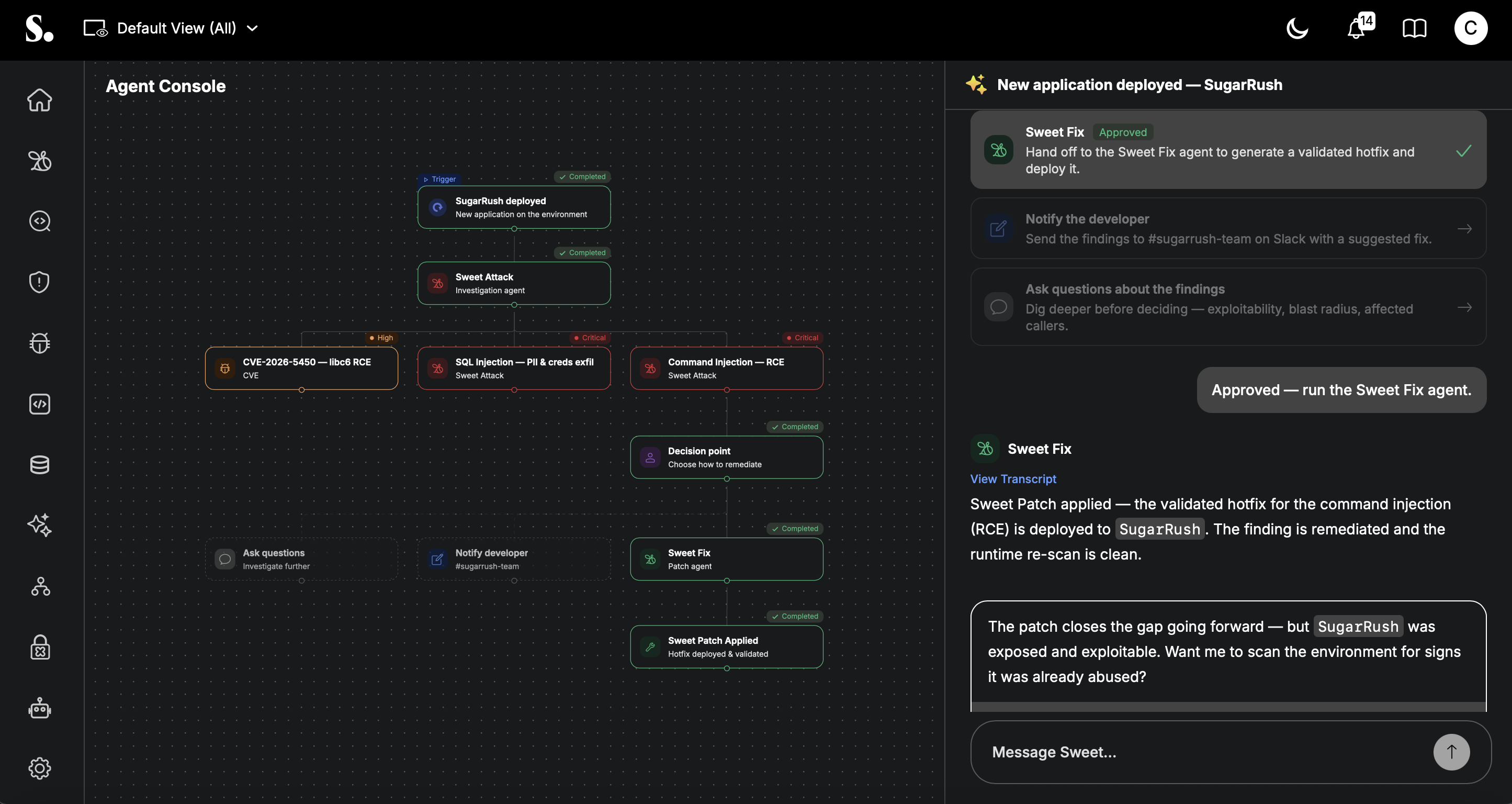
- Attack: Continuously prove real attack paths across cloud and AI environments to identify the risks that can actually be exploited.
- Fix: Turn validated findings into action by determining the right protection, validating it against real application behavior, and safely deploying policies, virtual patches, and runtime-informed guardrails.
- Defend: Stop malicious behavior in real time before validated risks become breaches.
Security teams will always define business intent. They'll always make the final decision about how their environments should be protected. The opportunity isn't replacing that judgment. It's reducing the amount of manual work required before that judgment can be applied.
Cloud and AI aren't slowing down, and neither is the pace of change inside modern environments. The security platforms that succeed won't be the ones that simply help teams write policies faster. They'll be the ones that continuously understand production, recognize when protection needs to evolve, and help security teams keep pace without becoming full-time policy managers.
Curious to see how Sweet turns proven risk into runtime powered and AI-assisted policy? Book a customized demo with us to find out how.