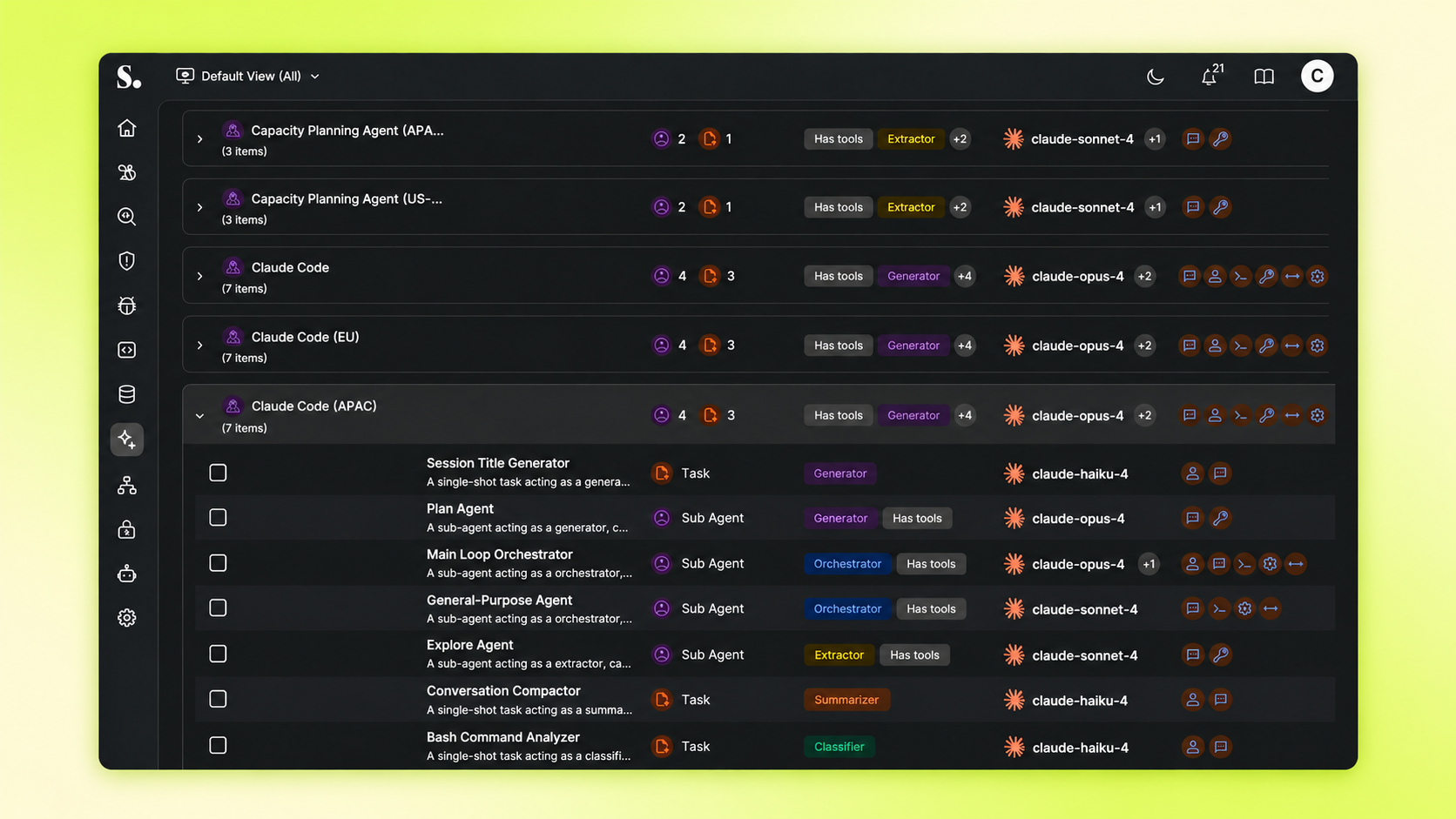



Observability has fundamentally changed how we operate modern applications. Today, organizations can understand what is happening across applications, workloads, identities, APIs, infrastructure and, increasingly, AI agents in remarkable detail. That visibility is critical for security. Runtime context helps us understand which vulnerabilities are actually relevant, how identities and permissions are being used, what applications are communicating with, and how behavior changes inside production environments. With this in mind, observability and security are not the same thing.
It’s kind of like 24-hour cable news: We can watch events unfold anywhere in the world in real time, but watching doesn’t change the outcome. Information travels instantly; action usually doesn’t. Security has operated the same way for years. We detect something in milliseconds, generate an alert, open a ticket, route it to another team, investigate the issue, and eventually remediate or contain it. By then, a critical incident may have already occurred.
Watching the world burn isn’t particularly useful if you can’t do something about it immediately. Security needs to close the gap between knowing what’s happening and actually doing something about it. That’s the line Sweet crosses for both cloud and AI.
The Sweet Learning Loop: Turning Runtime Observability Into Security Actions
The Sweet Learning Loop is how Sweet turns runtime intelligence into rapid security outcomes. Runtime data isn’t bolted onto the platform; it is the foundation for understanding applications, APIs, identities, infrastructure, AI agents and more. Sweet applies that intelligence across cloud and AI to continuously Attack, Fix and Defend environments. What the platform learns in one stage becomes context for the next, allowing it to move from understanding the environment to taking action.
Attack: Stay Ahead of Attackers
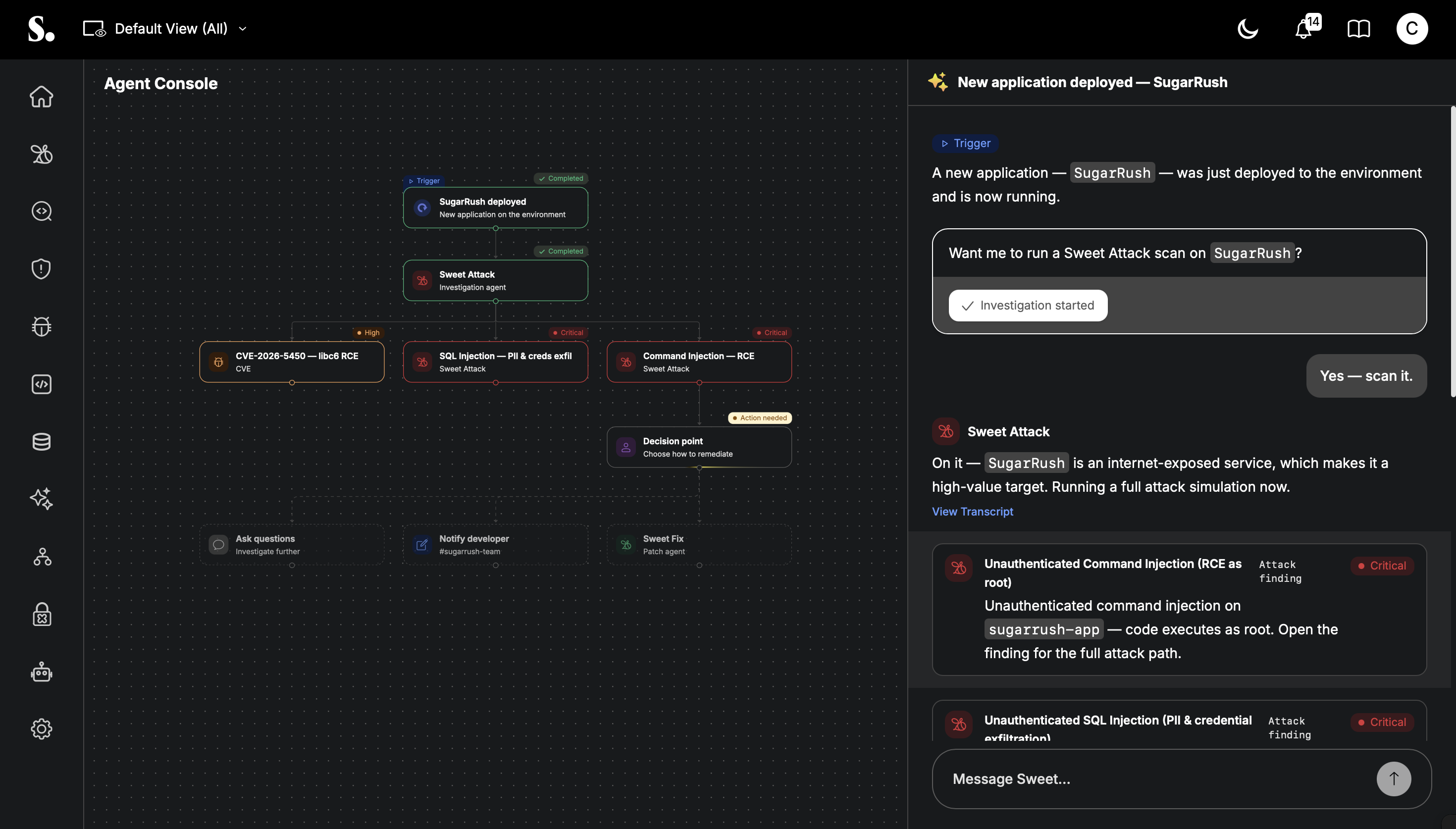
AI is reducing the time required for reconnaissance, experimentation and attack chaining, allowing techniques that once took weeks to increasingly happen in minutes. Defenders need to move first. Sweet Attack is Sweet’s AI red team agent that continuously operates across production environments to prove how attackers could move before they do. Sweet doesn’t begin with an abstract external model of the environment. It starts with the runtime context and reasoning the platform already has. When a new application comes online, Sweet Attack can map an executable attack path, pull the actual source code and configuration from the running workload, analyze the application for vulnerabilities, and validate whether those vulnerabilities can actually be exploited.
Sweet Attack exercises the path against the user's environment instead of assuming that a collection of risky conditions represents a real attack. If access expands, it keeps going. If the path doesn’t work, it stops. When an attack succeeds, teams get concrete evidence of what was reached and how the attacker got there.
Bottom line: Sweet doesn’t wait for an attacker to perform the reconnaissance and find the path. We do it first.
Fix: Prioritize and Remediate What Matters
Once Sweet has proven what can be exploited, the next job isn’t generating another finding or alert. It’s removing the risk. Sweet uses proven attack paths from Sweet Attack, along with its runtime reasoning, to prioritize the vulnerabilities, permissions, configurations and other conditions that can actually lead to compromise. Then, it remediates them. In the product screenshot above, Sweet Attack validated an unauthenticated command injection vulnerability that can lead to remote code execution. From there, Sweet Fix evaluates the available remediation options, generates a validated hotfix - and, with the team’s approval, deploys it directly to the application.
Bottom line: Sweet doesn’t just observe or provide manual remediation instructions. It prioritizes the problem, remediates it and validates that the fix worked. We do something.
Defend: Stop Malicious Behavior in 100 Milliseconds or Less
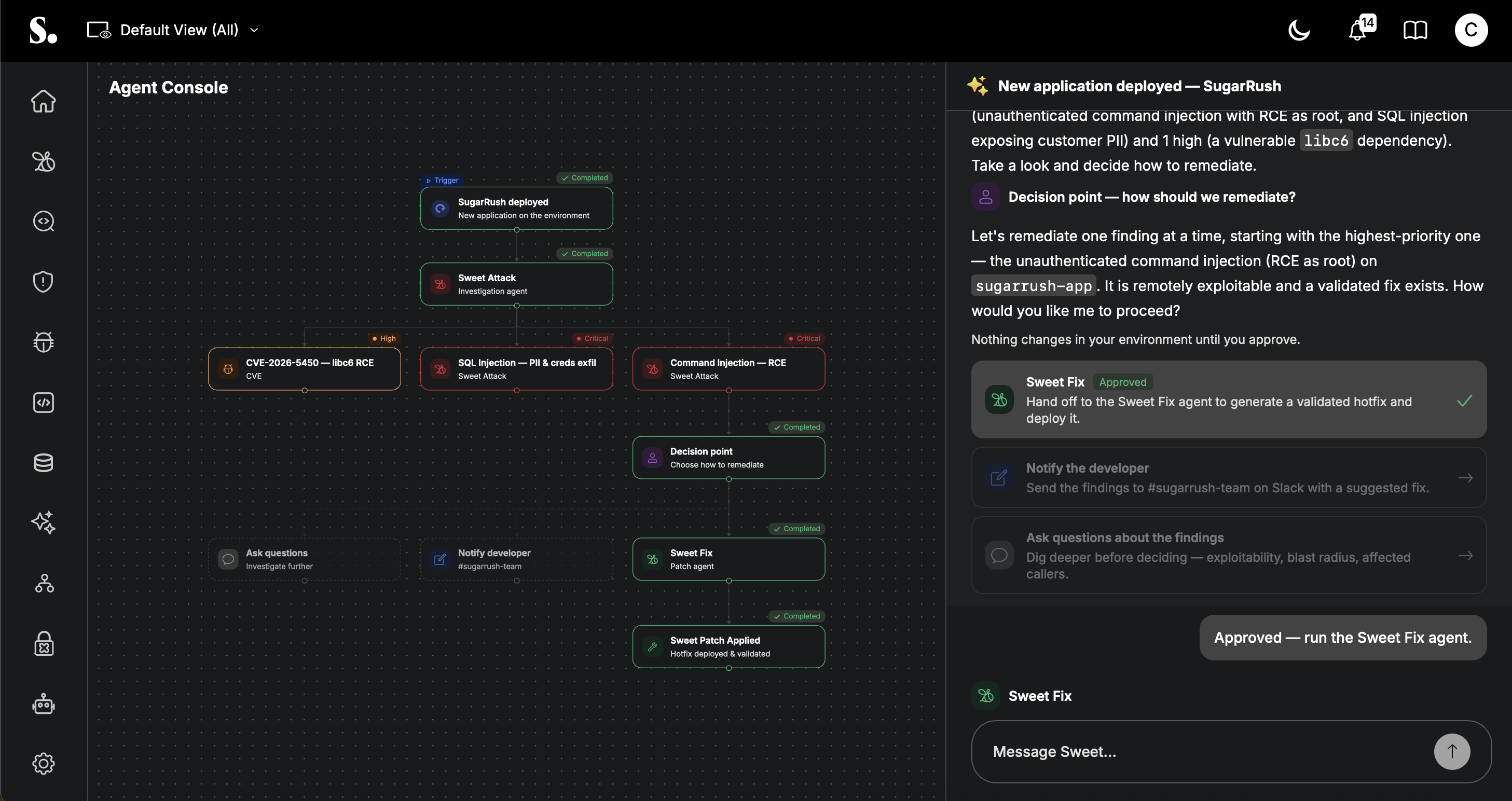
Fixing a proven risk protects the environment going forward. It doesn’t tell you whether an attacker already got through while the exposure existed. That’s where Defend comes in. After applying the hotfix, Sweet checks the runtime environment for signs that the vulnerability was already abused. It analyzes live processes, network activity, file events and changes from the application’s baseline. In our example screenshot sequcne, those signals reveal an active cryptominer running on the workload.
Sweet doesn’t stop at raising the incident. It can terminate the malicious process and prevent it from restarting, containing the active threat directly from the same workflow. That same runtime enforcement extends across cloud and AI environments. Sweet can contain compromised workloads, terminate malicious processes, prevent affected Kubernetes workloads from being rescheduled, and orchestrate response through automations and reusable playbooks.
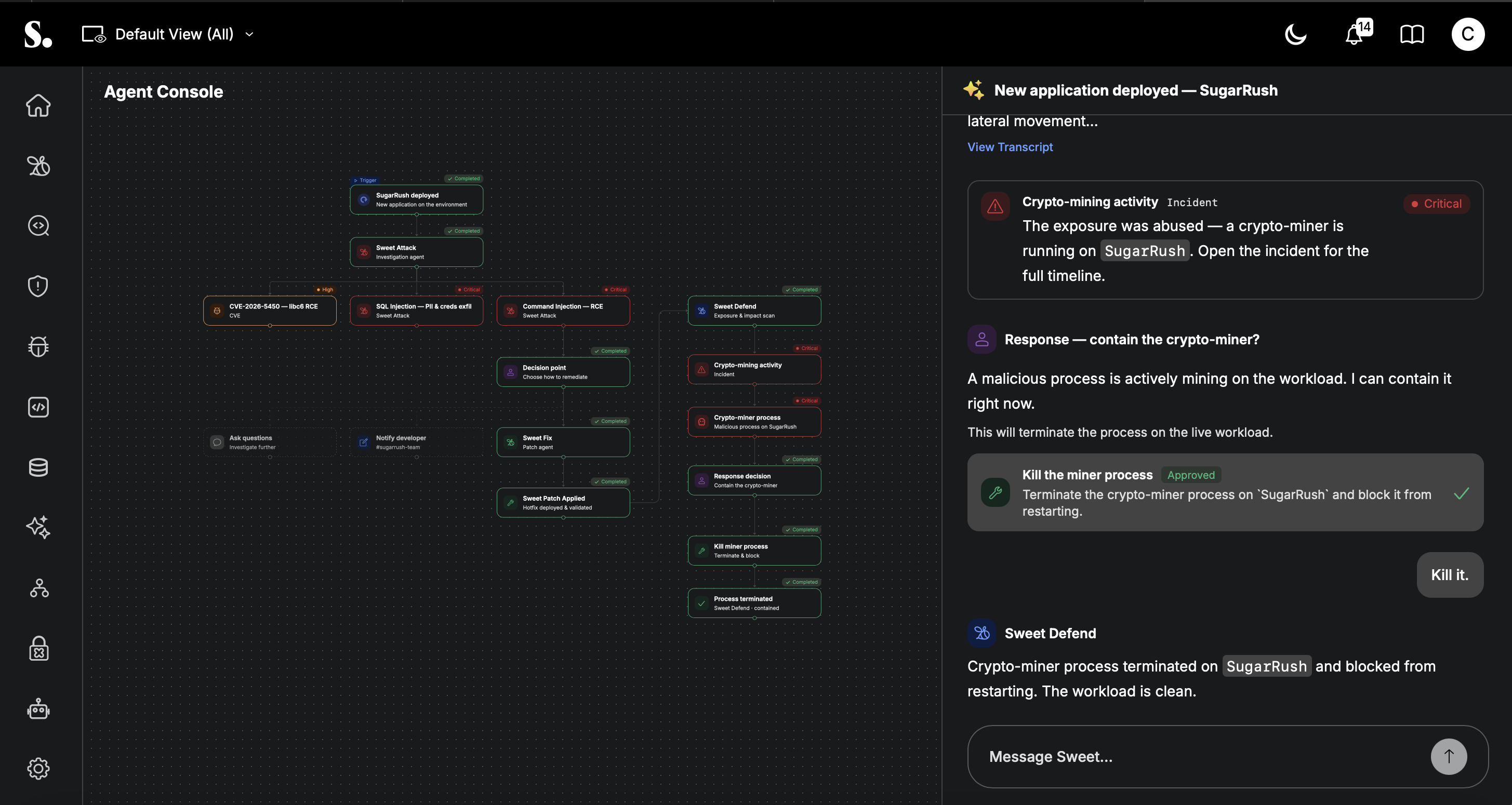
At Black Hat, we extended our proactive runtime enforcement model to AI agents with Agentic AI Blocking. As agents connect to cloud infrastructure, identities, APIs, tools and sensitive data, Sweet can enforce guardrails while they make decisions and take action, stopping unauthorized behavior before it becomes a business-impacting incident. AI blocking is one example of the broader model.
Bottom line: Whether the malicious behavior comes through an AI agent, application or workload, Sweet doesn’t just watch the news come in. It acts in real time to stop it.
Sweet Doesn’t Just Observe. We Do Something.
The security industry has spent years getting better at seeing what’s happening. The problem isn’t a lack of telemetry or context. It’s the distance between seeing something and doing something about it. Watching the world burn isn’t particularly useful if you can’t do something about it immediately. Security shouldn’t be 24-hour cable news.
That’s what Sweet changes. We use runtime intelligence to find attack paths before attackers do, prioritize and remediate the conditions that make those attacks possible, and stop malicious behavior when it happens. We’re not building a better way to spike your anxiety from your desk. We’re building a platform that takes care of it.
Observability helps you understand your environment. Security should defend it. That’s what Sweet does: It actively defends your cloud and AI. Relax, have some coffee, and disconnect from 24-hour cable news. With Sweet, it’s handled.
See It in Action
If you’re ready to see what security beyond observability looks like across your cloud and AI environment, book a demo with us to see it in action.