What is RAG Poisoning and How to Prevent It?
Sweet team
|
October 19, 2026
Retrieval-augmented generation puts external documents directly into an AI system's live decision path. RAG poisoning exploits that design: corrupt what gets retrieved, and you change what the model says without touching a single model weight. This guide covers the attack chain, why RAG applications are exposed, and which controls reduce the risk. It focuses on corpus and retrieval integrity. Model-level defenses such as alignment training and output classifiers are adjacent concerns and are not covered in depth.
Key takeaways about RAG poisoning
- RAG poisoning changes AI answers by placing attacker-influenced documents in the retrieval path, leaving model weights untouched while making corrupted material appear as grounded, cited information.
- RAG poisoning attacks can alter source content, embed instructions in ingested files, or game relevance signals, allowing harmful passages to outrank legitimate material for targeted questions.
- The risk grows when systems assume retrieved data is trustworthy: semantic similarity measures relevance, not authority, accuracy, currency, or approval status.
- Reducing this risk requires accountable sources, preserved document lineage, least-privilege access, query-time restrictions, retrieval evidence, and rapid rollback to verified content after suspected corruption.
Run AI on a secured infrastructure.
See Sweet secure your cloud-native applications and AI agents in one platform, in a 30-minute walkthrough.

What is RAG poisoning?
Most discussions of AI integrity start with training data, which is where the risk used to live. RAG changed that. When an assistant answers a question, it pulls documents from a corpus milliseconds before generating a response, and retrieved passages frequently outweigh the model's internal priors. Whoever controls that corpus controls a meaningful share of the answer.
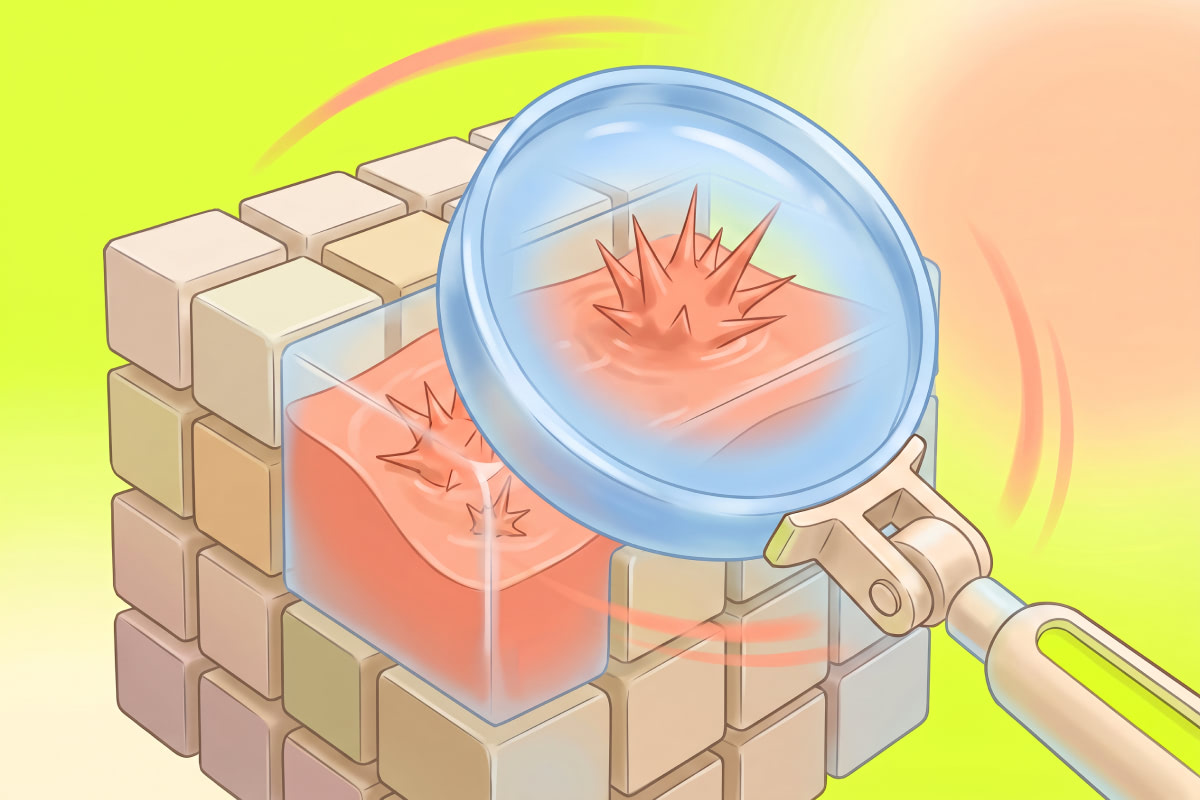
RAG poisoning is the deliberate corruption of the knowledge a retrieval-augmented application can retrieve, so that attacker-influenced content enters the model's context window and shapes its output. AI data poisoning, by contrast, targets training sets and model behavior at the weight level. In RAG poisoning the model is intact and the pipeline functions as designed; the failure is one of knowledge integrity at retrieval time.
Consider a running example used throughout this guide: an internal policy assistant that answers employee questions about vendor payments. If someone edits the authoritative payment policy document it indexes, the assistant will faithfully repeat the altered rule, confidently and with a citation. The corruption only becomes an answer because retrieval carries it there, which is where the attack chain begins.
How RAG data poisoning attacks work
Retrieval is the mechanism that turns a quiet corpus change into a loud model output, so understanding RAG data poisoning means tracing a document from storage to generated text.
The RAG retrieval and generation pipeline
Each stage in a RAG pipeline accepts input from the stage before it, and most implementations do not re-evaluate whether that input deserves trust. That inherited trust is what attackers exploit.
Stages where corpus content becomes answer content
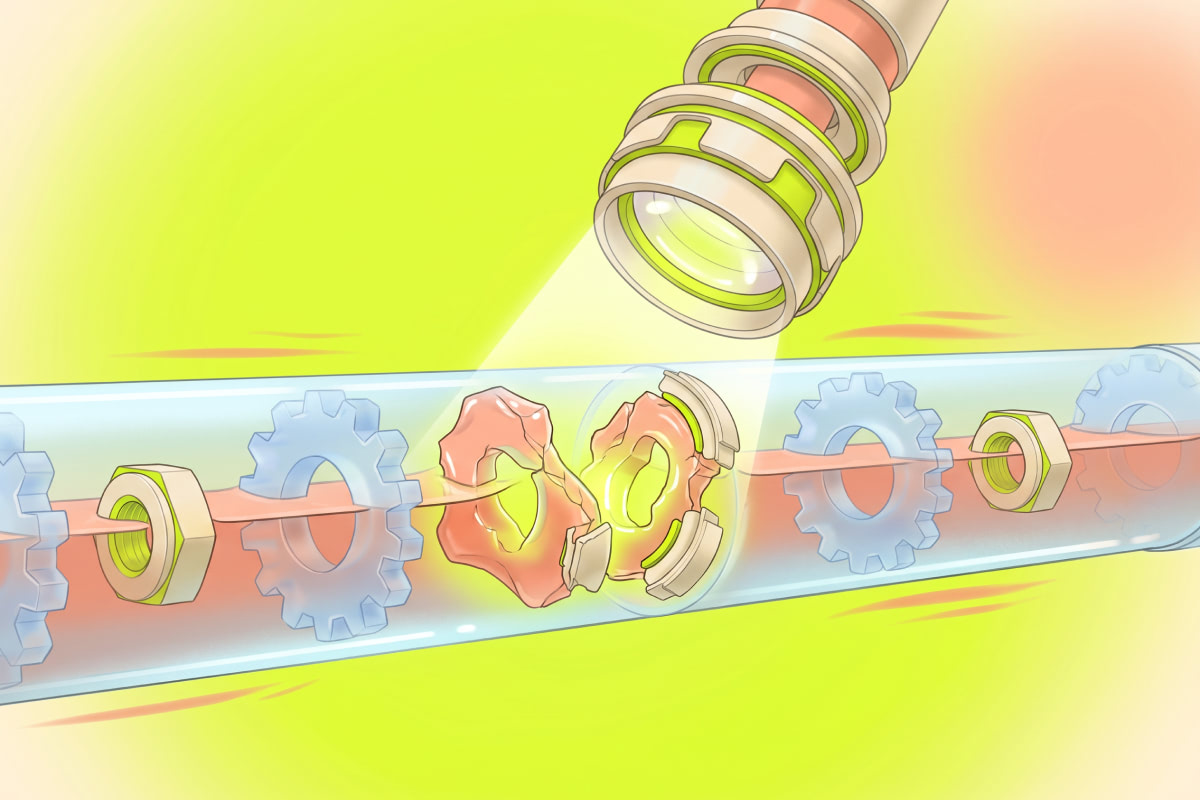
- Ingestion: A connector pulls documents from a wiki, object store, ticketing system, or public source into the pipeline.
- Chunking: Documents are split into passages, separating text from the surrounding context that might have made tampering obvious.
- Embedding: Each chunk becomes a dense vector, and semantic similarity, not authority, becomes the organizing principle.
- Retrieval: A user question returns the top-k ranked chunks, typically three to ten passages depending on configuration.
- Generation: The model composes an answer from those passages, usually treating them as factual grounding.
Nothing in that sequence asks whether the policy document was legitimately modified. Relevance is computed; provenance is assumed.
How malicious content reaches the model context
In the policy assistant scenario, an attacker with write access to the vendor payments wiki page changes one clause: approvals above a threshold no longer require second-party sign-off. The next scheduled sync ingests the edit. No alert fires, because nothing abnormal happened at the infrastructure layer. A trusted connector read a trusted source.
The poisoned chunk then sits in the vector store looking identical to every legitimate passage. When a finance employee asks about approval limits, that chunk is among the most semantically relevant matches available, so it is retrieved, placed in context, and summarized into an answer with a link back to the "official" policy.
What makes this effective is that the attacker never needed to reach the model, the prompt, or the application code. They needed one writable source, and the same outcome can be reached by compromising source trust, document contents, or retrieval priority.
Common types and example attack patterns
Those three leverage points map to three recurring families of RAG poisoning attacks, each manipulating a different link in the chain of custody. The patterns below are not mutually exclusive; real incidents often combine them.
Direct knowledge base poisoning
This is the policy-document case: content that is authorized to be in the corpus but no longer says what the organization approved. It also covers stale-but-authoritative text left indexed after a policy change, and documents inserted through a connector nobody remembers provisioning.
Very few crafted passages can dominate answers to a targeted question. The 2024 PoisonedRAG study (Zou et al.) reported high attack success rates against targeted queries after injecting a handful of adversarial texts into corpora of millions of documents, because retrieval only needs the poisoned passage to win a similarity comparison. These are controlled research results against specific retrievers and datasets, so success rates in a given production system will differ.
Indirect prompt injection in retrieved documents
Retrieved text does not have to assert false facts to be dangerous; it can issue instructions. A paragraph buried in an ingested PDF may tell the model to ignore prior guidance, summarize adjacent records, or call a tool with attacker-chosen parameters. Because the pipeline hands that text to the model as context, the boundary between data and instruction blurs. OWASP's Top 10 for LLM Applications treats this as prompt injection and classes it as a foundational untrusted-input problem.
Semantic retrieval manipulation
The subtler pattern never changes a true document. Instead, an attacker shapes text or metadata so their passage outranks the legitimate one: mirroring the exact phrasing of common questions, inflating recency or authority fields the ranker trusts, or flooding the corpus with near-duplicate variants. The genuine policy is still indexed. It simply never makes the top-k cut, and these openings exist because of how RAG systems are normally built.
Why RAG applications are vulnerable: an AI security threat in RAG applications
RAG is an AI security threat in RAG applications precisely because its most useful properties, broad connectivity and relevance-based ranking, are the same properties that obscure where knowledge came from.
Trust boundaries in external and internal data sources
Teams typically classify sources as internal or external and treat internal as safe. That boundary rarely survives contact with production. A corporate wiki is internal, but it is often writable by hundreds of accounts, synced from external systems, and edited by contractors. A support knowledge base is internal, yet it contains customer-submitted text.
The practical consequence is that "internal" describes network location, not content integrity. In the policy assistant, the compromised page never crossed a network boundary. It crossed an editorial one, and the pipeline had no way to tell the difference because nothing downstream re-checked authorship, approval status, or document version.
Weaknesses in embeddings, retrieval, and ranking
Even with disciplined sourcing, the retrieval layer introduces its own blind spots. Dense vector search optimizes for semantic closeness, typically cosine similarity over embeddings, a measure that is indifferent to whether a passage is accurate, current, or authorized. Hybrid retrieval and reranking change the ranking signals but do not by themselves introduce an authority check.
Retrieval-layer blind spots
- Relevance over authority: The top-ranked chunk is the closest match, not the most trustworthy document.
- Context stripping: Chunking discards headers, approval metadata, and version history that would signal tampering.
- Metadata trust: Rankers often boost fields like recency or source tier that an attacker may be able to set.
- No freshness verification: A superseded passage stays retrievable until someone explicitly removes or re-indexes it.
- Opaque selection: Many applications do not log which chunks were retrieved, so a wrong answer cannot be traced to its source.
Each weakness is a design trade-off rather than a bug, which is why mitigation has to be deliberate, and why the consequences land on whoever acts on the answer.
Real-world implications and risks of RAG poisoning attacks
Impact depends less on how clever the poisoning was than on who trusts the output and what they do next.
Misinformation, hallucinations, and unsafe outputs
A poisoned answer is not a hallucination. The model is behaving as designed, grounding its response in retrieved evidence and often citing it, which tends to make the output more convincing than an unsourced guess and harder for a reviewer to challenge.
In the policy assistant, the finance employee reads an altered approval threshold attributed to the official policy page. The failure mode is quiet: no error, no refusal, no anomaly in the response. Where a RAG application feeds an automated workflow or an agent with tool access, that confident answer can become an executed action before any human reviews it.
Data leakage, compliance, and business impact
The same chain works in the other direction. Instruction-bearing content in a retrieved document can push an assistant to include adjacent context in its response, summarize records the requester should not see, or send data to an attacker-controlled endpoint through a connected tool. The retrieval layer becomes an exfiltration path. Whether that succeeds depends heavily on how much tool and network access the application holds.
Regulated environments inherit a second problem: explaining what happened. If retrieval is not logged and documents are not versioned, teams cannot establish which answers were affected, over what window, or which users relied on them. That evidentiary gap also shows why response-side filtering arrives too late. Control has to start before a document becomes retrievable.
Preventing RAG poisoning: strategies and best practices
Preventing RAG poisoning works as a hierarchy, not a checklist. Each layer narrows what the next one has to catch, and the goal is a verifiable chain of custody from source to answer. No single layer is sufficient on its own, and the right mix depends on how the corpus is sourced and how much autonomy the application has.
Control hierarchy for corpus integrity
- Entry governance: Decide which sources, connectors, and identities may place content in the corpus at all.
- Provenance preservation: Carry authorship, version, approval state, and integrity hashes through chunking and embedding.
- Retrieval constraint: Limit what any given query, user, or agent can retrieve and what tools the answer can trigger.
- Production containment: Validate live behavior around the application and block unauthorized ingestion or retrieval activity.
Teams that skip straight to layer four end up policing outputs they can no longer trace, so the sequence matters.
Secure data ingestion and content validation
Entry governance starts with a documented inventory of every source feeding the corpus and the business owner accountable for it. Anything without an owner should not be indexed. For sources with distributed write access such as wikis, ticket systems, and shared drives, ingestion should require an approval state rather than a successful fetch.
Preserving integrity through processing is the second half. Hash documents at ingestion, store the hash and version alongside each chunk, and re-verify on sync so an unexpected edit to an authoritative file surfaces as a corpus change rather than a silent update.
Content checks for embedded instruction patterns help, but they are probabilistic and can be evaded by obfuscation or encoding. Aggressive filtering also suppresses legitimate technical documentation, so tune it against real corpus samples rather than defaults.
Retrieval guardrails and access controls
Clean ingestion still leaves the question of who can reach what, and over-permissioned service accounts are a common way provenance quietly collapses. Connectors, indexing jobs, and knowledge-base administrators should hold least-privilege, separately scoped credentials. A connector that only needs read access to one repository should never hold write access to the corpus. Identity security controls around those non-human accounts address a root cause that output filtering cannot reach.
Retrieval itself needs constraints: enforce per-user and per-agent authorization at query time rather than filtering after generation, cap how many chunks a single source can contribute to one answer, and require citations so responses remain traceable.
Ingestion and retrieval endpoints are application interfaces like any other, and API security practices apply to them directly. Unauthenticated or over-exposed endpoints let an attacker write to the corpus without ever touching the underlying source system.
Continuous monitoring, testing, and incident response
The final layer addresses what the first three cannot guarantee: a trusted identity behaving badly in production. Useful signals are RAG-specific, such as unexpected write volume to the corpus, a connector pulling from a source outside its scope, retrieval patterns concentrated on a single newly added document, or an agent querying far beyond its usual topics. Treating these as enforcement points, not just notifications, shortens the window in which a poisoned document keeps producing answers, though behavioral signals carry false positives and need tuning against normal corpus churn.
Testing should mirror the attack chain: insert benign canary passages and confirm whether they can win retrieval for targeted questions, then verify that the pipeline refuses unauthorized ingestion. Sweet Security takes a runtime-focused approach to AI security, observing and enforcing behavior across the workloads, identities, APIs, and data connectors that operate a RAG system. That complements corpus controls rather than replacing them: runtime tooling of any vendor sees behavior, not editorial accuracy, and only provenance and review establish whether a document says what it should.
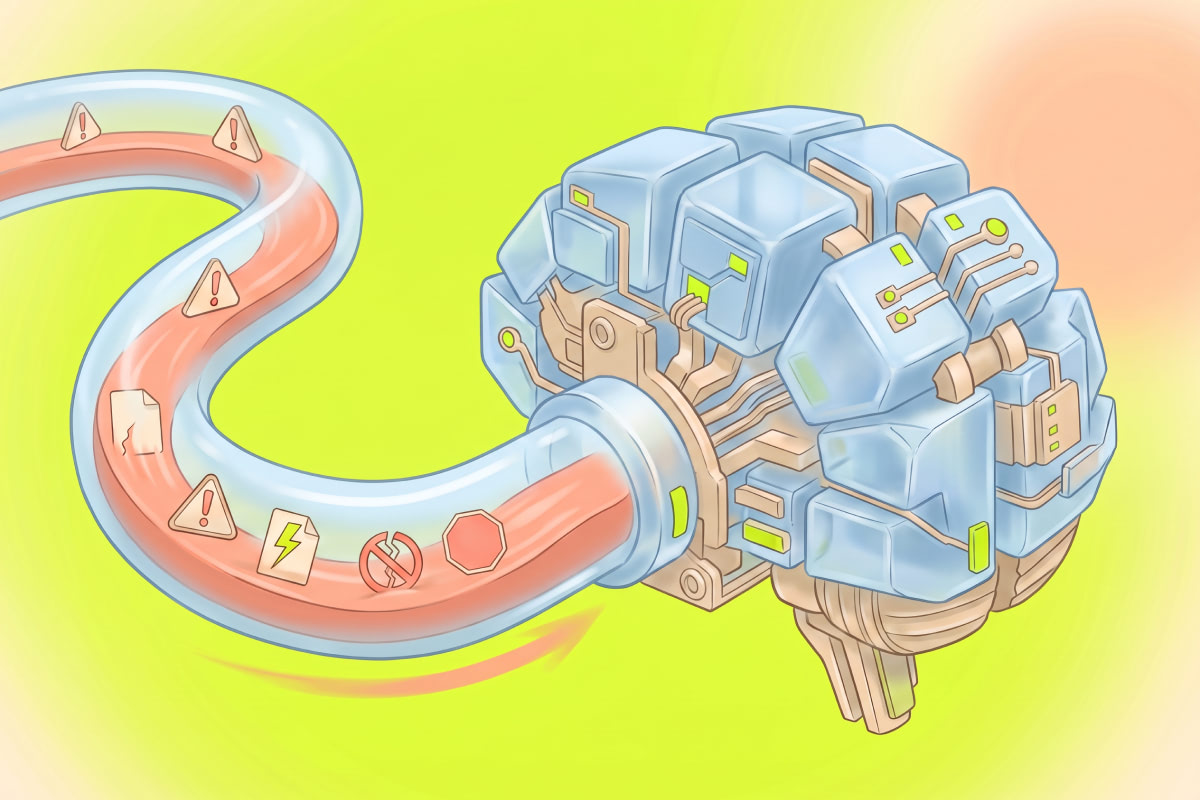
When corruption is suspected, scope the response to retrieval evidence: identify the affected documents and versions, reconstruct which queries retrieved them, bound the window, and roll back to a verified document state before reopening the index. Deeper investigation workflows belong to formal AI incident response; containment here is about restoring a known-good corpus quickly.
Related concepts and further resources
Scoping the response correctly also depends on naming the threat correctly, because RAG poisoning sits between several adjacent concepts that teams routinely conflate.
RAG poisoning vs prompt injection
Prompt injection is about instructions reaching the model; RAG poisoning is about who controls the knowledge the model retrieves. They overlap when a poisoned document carries hidden instructions, with injection as the payload and poisoning as the delivery mechanism, but they are not interchangeable. Injection can arrive through a user prompt with a pristine corpus, and a corpus can be poisoned with nothing but altered facts.
That distinction drives remediation: training poisoning requires retraining or model replacement, while corpus poisoning is addressed by restoring documents and tightening ingestion.
RAG security testing frameworks and guidance
No published framework yet covers retrieval integrity end to end, but several provide usable vocabulary. The OWASP Top 10 for LLM Applications addresses untrusted input, prompt injection through retrieved content, vector and embedding weaknesses, and supply-chain exposure. The NIST AI Risk Management Framework (AI 100-1) contributes provenance and traceability language that maps cleanly to document versioning and retrieval logging, and MITRE ATLAS is useful where a described technique matches observed behavior. Published RAG poisoning research demonstrates feasibility rather than prevalence: it is evidence that the attack works under tested conditions, not a measure of how often it occurs in the wild.
RAG makes external knowledge part of a live decision path, which is why corrupting a document can change answers without changing a model. The ingestion-to-answer chain, the attack patterns, the trust boundaries, and the control hierarchy all serve one operational question: was this retrieved passage authorized, intact, and safe to influence this answer right now? Teams extending these controls across a full production AI stack can continue with Sweet Security's complete runtime security guide.
RAG poisoning FAQs
What is RAG poisoning, and how does it differ from traditional AI data poisoning?
RAG poisoning corrupts the external documents retrieved by an AI application during runtime. Unlike traditional AI data poisoning, it alters model outputs without modifying underlying training data or model weights.
What are the primary ways attackers execute a RAG poisoning attack?
Attackers exploit RAG pipelines by directly altering source document facts, embedding malicious prompt instructions inside ingested files, or manipulating ranking metadata to force corrupted passages to outrank legitimate sources.
Why are RAG applications particularly vulnerable to data poisoning?
RAG systems rely on vector similarity, which ranks content based on semantic closeness rather than factual accuracy, authority, or approval status, while inherently trusting internal corporate sources and data connectors.
What are the potential business impacts of a successful RAG poisoning attack?
Poisoned retrieval leads to highly convincing misinformation backed by official citations. It can also trigger indirect prompt injections that cause unauthorized data leakage, compliance violations, or automated tool abuse.
How can organizations defend their RAG pipelines against poisoning attacks?
Defense requires strict ingestion governance, preserving document lineage with cryptographic hashes, applying least-privilege retrieval access, logging queries, and establishing fast rollback mechanisms to rapidly restore verified, uncorrupted content.