


API Policies allows security teams to continuously identify risky API behavior based on what applications are doing in production. By applying policies to live activity, Sweet helps organizations keep pace with changing APIs and move from identifying risk to taking action.
What Is an API Policy, and Why Does It Matter?
An API policy defines what an organization considers acceptable or unacceptable API behavior. It could require authentication when an internet-facing API returns sensitive data, prohibit payment information from traveling over an unencrypted connection, or prevent credentials from being sent to an external service.
The challenge is applying those requirements consistently as applications change. In modern cloud environments, APIs are regularly deployed or modified, and workloads connect to new third-party and AI services. Each change can affect what an API exposes, who can access it, and where organizational data travels. A point-in-time assessment can show whether APIs comply with policy at the time of the review, but it cannot account for changes introduced afterward. Without continuous monitoring, an API can begin violating an existing requirement long after the original review has ended.
Apply Policy to What APIs Actually Do
API policies make security requirements repeatable. Sweet continuously evaluates live runtime API activity, allowing teams to identify when an endpoint or application begins operating outside the organization’s defined boundaries. Because API risk often depends on several conditions appearing together, Sweet enables users to tailor policies on multiple conditions. For example, a security team can create a policy that identifies endpoints meeting all three of the following conditions:
- The endpoint is accessible from the internet.
- The endpoint returns sensitive data.
- The endpoint does not require authentication.
Once the policy is active, Sweet evaluates new and existing endpoints against the conditions outlined within the policy. If an internet-facing endpoint returns sensitive data without authentication, Sweet creates a violation and identifies the affected resource
Control What Your APIs Expose and Where Your Data Goes
Sweet applies API Policies to two areas of activity:
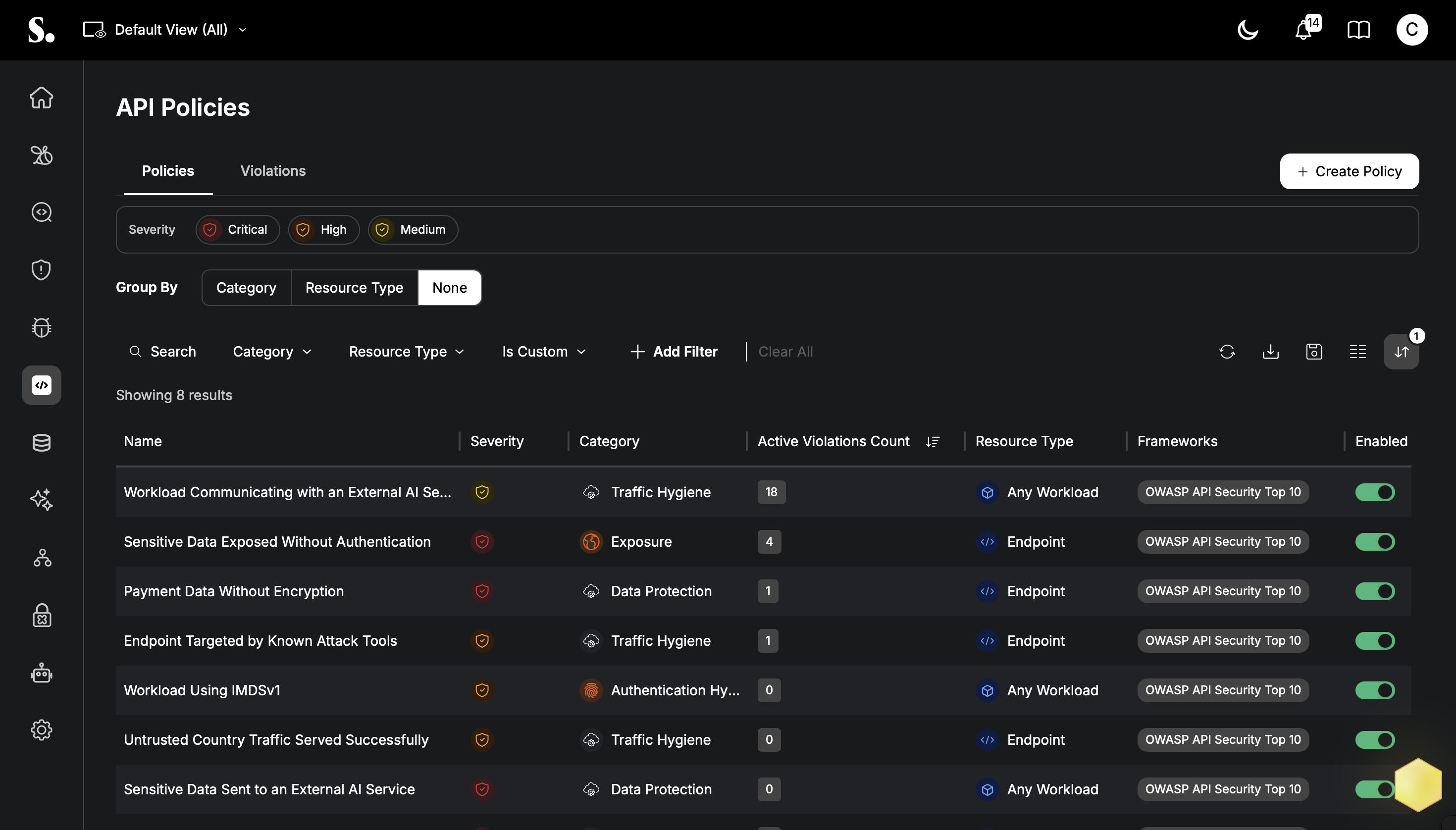
APIs exposed by the organization: Sweet can identify endpoints that return sensitive data without authentication, transmit payment information over an unencrypted connection, or successfully respond to traffic from an untrusted location or known attack tool.
External APIs called by applications: Sweet can identify applications communicating with external AI services and detect when sensitive data, credentials, or payment information is included in those communications.
When activity matches a policy, Sweet creates a violation against the relevant endpoint or application and connects it to the surrounding runtime context. From there, teams can use Sweet’s guided or automated response capabilities to take the appropriate action based on their policies and approval requirements.
Built-In, Custom, and Autonomous, Policies
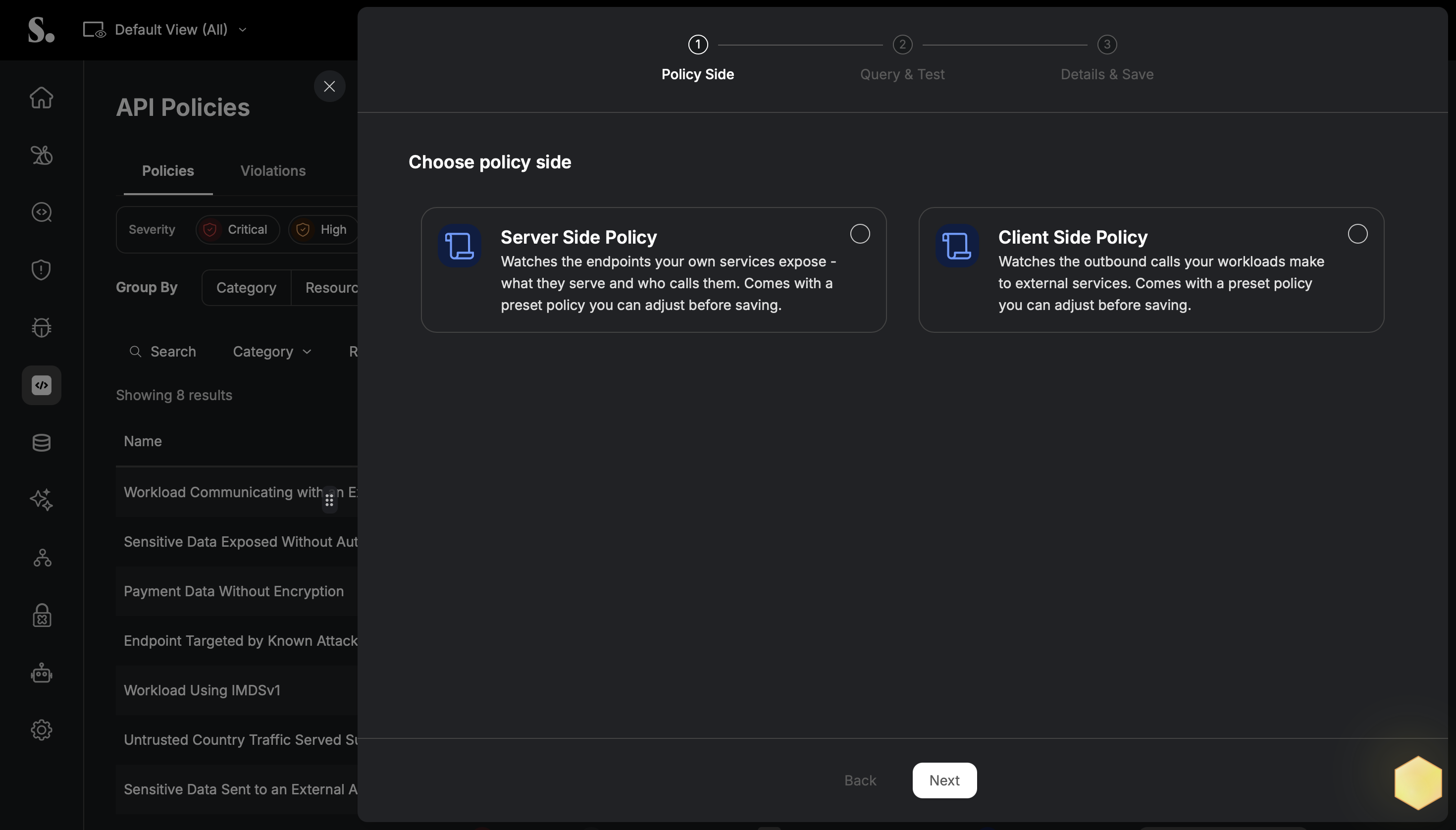
Sweet supports three ways to create and apply API policies:
- Built-in policies: Sweet includes policies for common API risks, such as sensitive data exposed without authentication or credentials sent to external services.
- Custom policies: Security teams can define policies based on their own business requirements and knowledge of the environment. Before activating a policy, they can test it against live activity, review which endpoints or applications match, and adjust the conditions as needed.
- Automated policy creation: Sweet can use runtime context to identify changes in application behavior that may require a new control and automate policy creation. This allows policies to evolve alongside production without requiring security teams to manually translate every change into a new rule.
Sweet groups policy matches around the affected resource instead of creating a separate alert for every connection. Each violation identifies the endpoint or application, its associated service, the conditions it matched, and representative traffic. This gives teams one actionable issue with the runtime context needed to guide or automate the appropriate response.
Keep API Policies Aligned With Production
APIs change whenever applications are updated, new services are deployed, or workloads connect to another external provider. The policies governing them need to keep pace with those changes. Sweet continuously applies API policies to live activity, identifies violations against the affected resource, and provides the runtime context needed to take action. Built-in policies, custom policy creation, and automation help security teams maintain consistent controls without manually reassessing every change in production.
Keep API policies aligned with how your applications actually operate. Request a personalized demo to see how Sweet identifies violations in live activity and helps teams act on them immediately.